New Rules for Hosts in 2027
The year 2027 brings the biggest changes for private accommodation in ten years. New rules for hosts in 2027 are coming. A mandatory registration number for listings on Booking and Airbnb is being introduced. A completely new Hospitality Act with recategorisation every ten years is on the way. The Government proposes extending temporary permits until […]





The year 2027 brings the biggest changes for private accommodation in ten years. New rules for hosts in 2027 are coming. A mandatory registration number for listings on Booking and Airbnb is being introduced. A completely new Hospitality Act with recategorisation every ten years is on the way. The Government proposes extending temporary permits until the end of 2030. The flat tax per bed is also rising in the most developed destinations. Below is an overview of what has been adopted and what is still in parliament. Find out what you can do by the end of 2026 to be ready for the 2027 season.
Registration number: no listing on platforms without it
The biggest change comes from the European Union. The obligation stems from the EU regulation on short-term rental services. The regulation has applied since 20 May 2026. Croatia is implementing it through the new Hospitality Act. It covers natural and legal persons renting out rooms, apartments and holiday homes. It applies to everyone listing them on short-term rental platforms. The number will need to be obtained and displayed during 2027. Obtaining it will be free, digital and simple. The number is issued on request by the Ministry of Tourism and Sports.
The procedure will run through the existing eTurizam system. The categorisation decision is attached to the application. If the host has none, the system automatically offers a categorisation request. The penalties are serious. Natural persons face fines of 2,000 to 6,600 euros for listing without a registration number. Platforms that fail to report an invalid number pay 13,000 to 130,000 euros. Alternatively, the fine is 1 to 6 percent of revenue. If the number is fake or missing, the platform must remove the listing.
Important: the obligation is not yet in force. On 21 October 2026, the Government adopted the final draft of the law. The registration number provisions are planned to apply from 1 May 2027. This gives hosts and platforms time to adapt. All official information is published by the Ministry of Tourism and Sports.
New Hospitality Act: what is changing
The Government sent the Draft Hospitality Act to Parliament at the end of June 2026. The final draft was adopted on 21 October 2026 and goes to a second reading. Entry into force is planned for 1 January 2027. The SMOi association filed a submission with the European Commission through the TRIS notification procedure. It asks for a review of the law’s compliance with EU law before adoption. The text may still change in the second reading, but the direction is clear.
Recategorisation every ten years.
For private hosts, recategorisation will be mandatory every ten years. Hotels and campsites go through the procedure every five years. The deadline starts when the ordinance on minimum requirements enters into force. The minister has yet to issue that ordinance. Those who fail to meet the requirements bear the costs of the procedure. Local government decides on categorisation. Town and municipal councils may restrict or ban categorisation for certain types of property. Those types will then no longer be eligible for categorisation. The provision builds on the Destination Management Plans of the tourist boards.
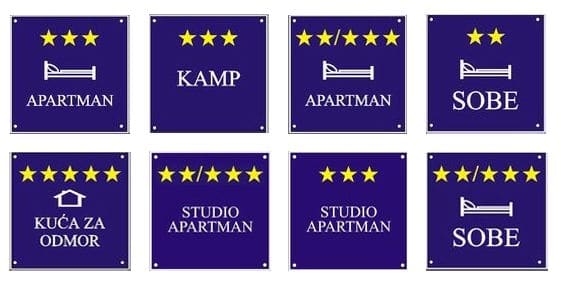
End of transferring categorisation to a spouse. After deregistration, the host and close family cannot immediately obtain a new decision. This applies to spouses, common-law partners, life partners and children. A new decision is possible only one year after the approval is revoked.
Obligations, stricter supervision and higher fines!
Unpaid tourist tax means losing the decision. The debt status is determined as of 31 March of the current year for the previous year. Anyone with outstanding obligations by that date loses the categorisation decision

Wider supervision. Alongside the State Inspectorate, the Customs Administration and municipal wardens will also carry out checks. In protected areas, nature rangers will supervise too. Indicators of unregistered renting include frequent registrations of different people throughout the year. Others are increased water and electricity consumption, third-party reports, listings and guest reviews.
Higher fines for operating without a decision. Companies and sole traders face fines of 5,500 to 20,000 euros for operating without a decision.
Hospitality businesses and residential premises. Legal persons and sole traders will no longer be able to obtain new decisions for apartments and rooms in residential premises. All administrative procedures move exclusively to the eTurizam system.
The full draft and submitted comments are available on the e-Savjetovanja portal.
Co-owners’ consent and the concept of host
This obligation has been in force since 2025 and enters the third year of the deadline in 2027. For short-term rental of flats in buildings, written co-owner consent is a condition for the decision. Existing hosts must obtain it within five years of the law entering into force. Consent from two-thirds of co-owners by ownership share is required. The consent term may not be shorter than five years. Anyone who fails to submit consent on time loses the decision to operate. A person renting a flat in a multi-apartment or mixed-use building is not considered a host.
Do you work with us? Don’t wait. Get in touch and we will prepare the co-owner consent documentation for you!
Temporary permits: the Government proposes an extension until the end of 2030
Hosts without completed legalisation operate on the basis of temporary permits. Under current law, these permits are valid until 31 December 2026 at the latest. New applications have not been accepted since 1 January 2025.
On 21 October 2026, the Government adopted the final draft of the Hospitality Act. It extends temporary permits until 31 December 2030. That is four years more than the current deadline. The extension affects around 15,000 hosts. It was one of the main demands of family host associations. The aim is to give hosts time for legalisation and permanent decisions. Counties will report the number of temporary permits to the Ministry every year by 30 June.
Important: the extension is not yet in force. The draft law has been sent to Parliament for a second reading. Until the law is passed, the 31 December 2026 deadline applies. Counties continue to urge hosts to submit applications on time. Our advice: don’t wait for 2030. If you can complete legalisation, do it now. The extension is a safety net, not a reason to delay.
Flat tax per bed rises by 50 percent
Along with the new rules for hosts in 2027 come tax changes. On 10 September 2026, the Government sent a tax package to Parliament. If adopted, it would apply from 1 January 2027. In category 1 of the Tourism Development Index, the range rises from 100–300 to 150–300 euros per bed. In category 2, it rises from 70–200 to 100–200 euros. The third (30–150 euros) and fourth categories (20–100 euros) remain unchanged. If a municipality makes no decision, the statutory amount rises from 200 to 225 euros. In category 2, it rises from 135 to 150 euros.
Most coastal destinations fall into the first two categories. Most municipalities and towns have so far chosen the legal minimum. In practice, this means a 50 percent higher flat tax for most hosts. The final amount within the range is set by each municipality or town by its own decision. Current amounts and rules are published by the Tax Administration.
Fiscalisation 2.0 and eInvoicing: who is affected
This topic causes the most confusion and it is worth clarifying. A private host on flat-rate tax is not subject to fiscalisation or eInvoicing. This applies in both 2026 and 2027. An invoice must still be issued to the guest at every payment. It is different for sole traders and companies. VAT payers have been in the eInvoicing system since 2026. From 1 January 2027, the obligation also applies to businesses outside the VAT system. It concerns B2B transactions. Do you rent through a sole trade or limited company? Secure eInvoicing software by the end of the year.
Anchor prices and a digital price list on your website
The decisions on anchor prices and price list publication were published in Official Gazette 101/2026. They were due to apply from 1 October 2026. The Government amended them on 29 September 2026 (OG 110/2026). Application now begins on 17 November 2026. The reference date remains 10 September 2026. The price displayed is the one valid on that day, not the price on the start date.
The Ministry recommends stating only the date, without the label “anchor price” or “additional price”. For example: “Price on 10/09/2026”. On the same day, the base prices under the Consumer Protection Act also take effect. The obligation thus ceases to be a temporary measure and becomes permanent.

For hosts, the Ministry of Economy’s clarification is key. The obligation does not apply to accommodation prices in own booking systems. Nor does it apply on intermediary rental platforms. Platforms do not display an additional price for third-party services. They anchor only their own services charged directly to the consumer. The nightly rate on Booking, Airbnb or your own booking system needs no anchor price.
However, small hosts are also subject to anchor prices. The exception covers only the accommodation price in booking systems. Additional services with a fixed price must also show the price from 10 September 2026. These include final cleaning, pets or bicycle rental. The anchor price is displayed even when it equals the current price.
Important: Anyone with their own website must publish a price list there in XML or CSV format. The obligation applies even if the website serves only as a business card. An Instagram or Facebook profile does not count as a website. The price list must be publicly accessible without login. It is updated by 8 a.m. after any price change. Each version remains available for 30 days. A PDF price list is not enough. Supervision is carried out by the State Inspectorate.
Fines go up to 30,000 euros for legal persons and 20,000 for sole traders.
Rules for hosts 2027: what to do by the end of 2026
- Settle your tourist tax and tourist board membership fee — from 2027, debt means losing your categorisation.
- Check that you hold a regular categorisation decision. The extension of temporary permits to 2030 applies only once the law is passed.
- If you rent a flat in a building, start collecting written co-owner consent.
- Follow your municipality’s or town’s decision on the new flat tax per bed.
- If you operate through a sole trade or company, prepare an eInvoicing system.
- If you have a website, publish a price list in XML/CSV format by 17 November 2026. For additional services as well show the price from 10 September 2026.
- Prepare documentation for the registration number. Application is planned from 1 May 2027. Follow the announcements of the Ministry of Tourism and Sports.
Conclusion
The new rules for hosts in 2027 do not ban short-term rentals. They do, however, place them in a much stricter framework. The registration number, recategorisation, stricter supervision and a higher flat tax are coming. If the law passes, temporary permits gain four more years. Those who are properly categorised and pay their dues on time enter 2027 without fear. Want someone to keep track of regulations, guests and platforms for you? Take a look at our carefree rental offer for apartments and villas in Istria. Velox Tours has worked with hosts in Istria for over 30 years. We help them start every season prepared.
Published: 26/10/2026