Višnjan Observatory with Kids: A Night Among the Stars
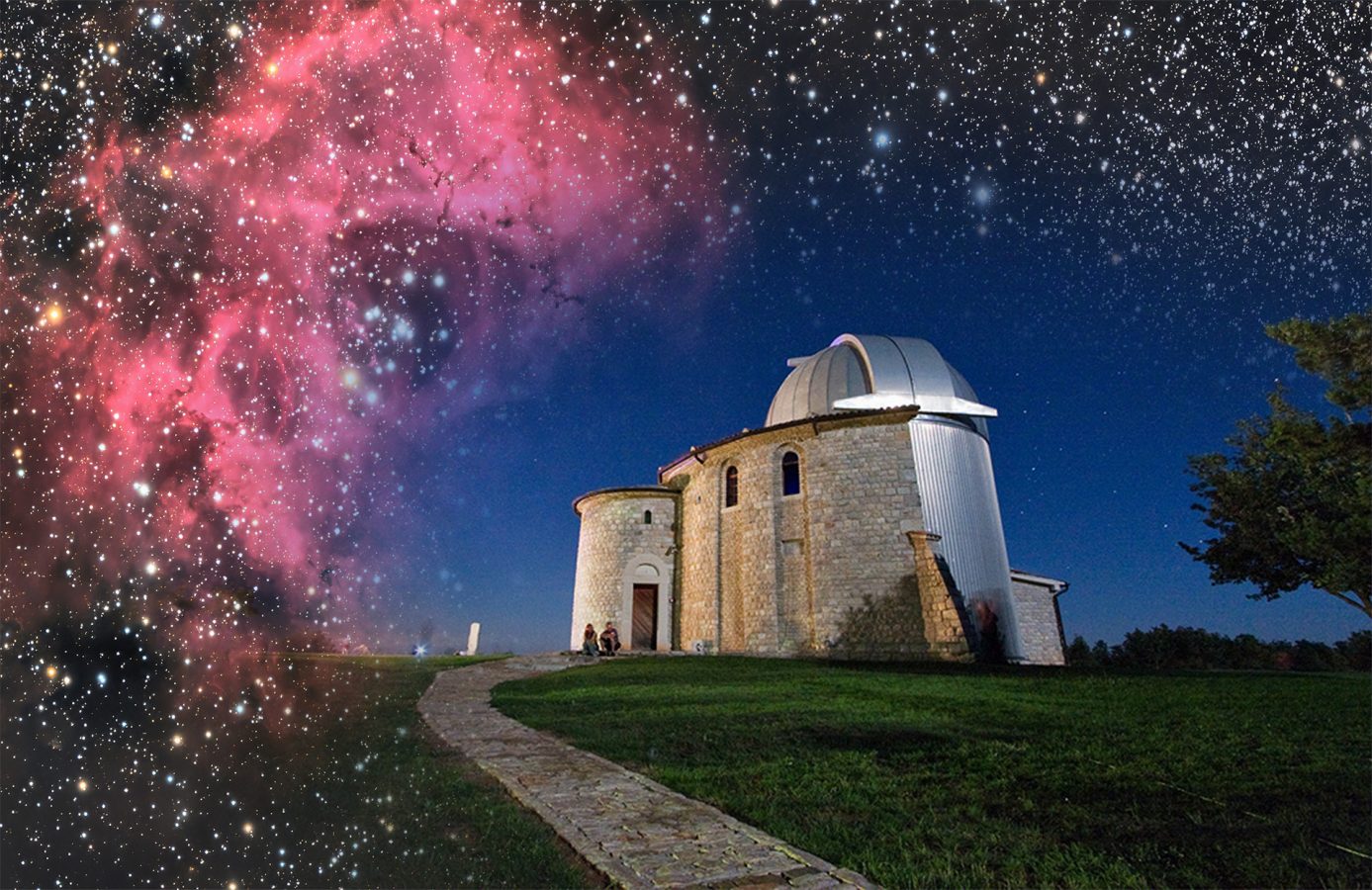
Višnjan Observatory with kids is an outing children talk about for weeks. Some twenty minutes from Poreč, on Tićan hill, sits one of the world’s most successful observatories in the hunt for asteroids. The evening programme is open to ordinary families too. Children step into the dome with its one-metre telescope and walk through a […]


Višnjan Observatory with kids is an outing children talk about for weeks. Some twenty minutes from Poreč, on Tićan hill, sits one of the world's most successful observatories in the hunt for asteroids. The evening programme is open to ordinary families too. Children step into the dome with its one-metre telescope and walk through a stone circle reminiscent of Stonehenge. Under a true night sky, they learn to recognise constellations with the help of a laser "pointer". Here's what it looks like and what you need to know before booking.
Why Višnjan Observatory with kids is not a typical museum
There are no display cases or information boards to read here. This is a working scientific station where asteroids are actually tracked every clear night. Visitors enter that world through a guided programme. Višnjan Observatory and the Višnjan Astronomical Society are non-profit organisations with a fifty-year tradition. Together with their sister organisations, they run a range of educational projects across the entire STEAM field. The focus is on working with highly motivated and gifted pupils.
For children, that means the story isn't told by a guide reading from a script, but by the people who actually do the work. And you can feel it.
Astro Night: what the programme looks like step by step
A lecture tailored to the age group
The programme opens with a lecture. Topics are chosen from astronomy and the observatory's own field of work. For groups, the lecture is adapted to the age of the audience — the Solar System, the "spaceguard" programme and so on. Younger children get a story about planets and asteroids; older ones get concrete facts about how a dangerous object is detected.
The dome and the Dagor telescope
Next comes a tour of the observatory and the dome. Children stand beneath the one-metre telescope named Dagor. It was mounted in 2002, saw first light in trial operation in 2014 and entered full operation at the end of 2017.
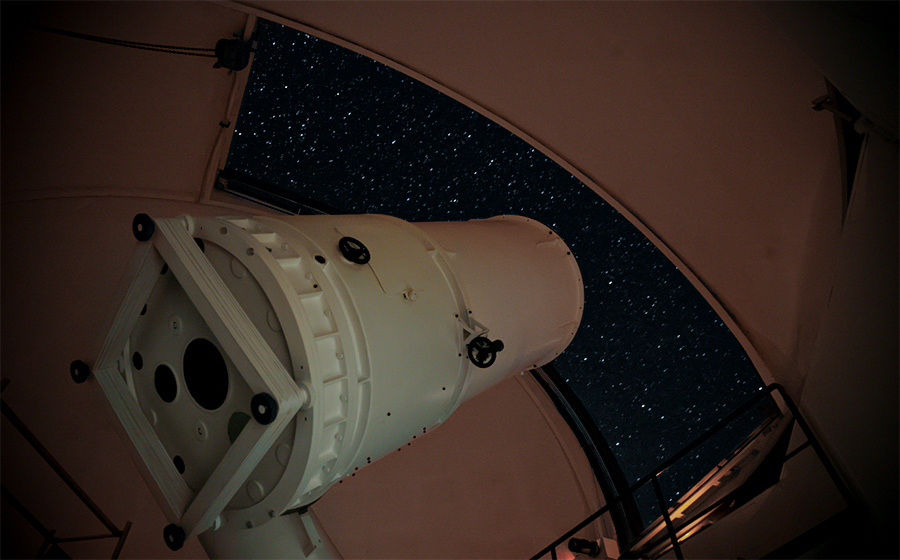
Important for managing expectations: the main telescope in the dome is used exclusively for research and visitors do not look through it. Tell the children in advance so there's no disappointment. The dome is still impressive because it is enormous and opens up right in front of them.
Observing and a laser tour of the constellations
If the weather allows, visible celestial objects are observed through an amateur telescope on the meadow in front of the observatory. The evening closes with a guided tour of the constellations using a laser. That green beam "drawing" across the sky is regularly the children's favourite part of the night.
The programme lasts between one and two hours, depending on group size and weather conditions.
The stone circle: Istria's Stonehenge
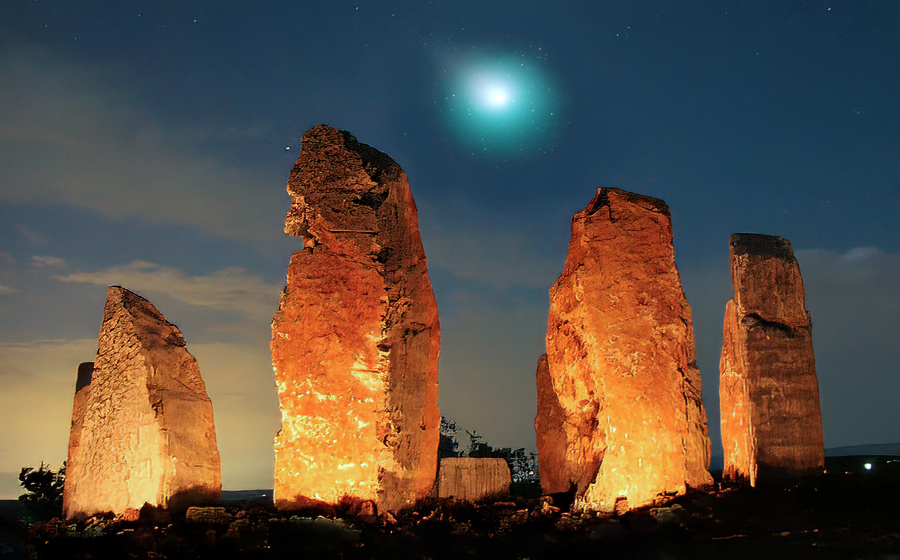
Next to the observatory stands an installation that looks like a miniature copy of Stonehenge. It is a reconstruction of a prehistoric sanctuary and solar observatory from the archaeological site of Mali sv. Anđeo near Poreč. The stone circle is part of the tour and is perfect for explaining how people measured time before clocks. Children grasp the idea instantly when they see the stones aligned with the Sun.
Asteroid hunters: the story that wins kids over immediately
Numbers that impress
There really is a "spaceguard" here. From the observatory, 1,447 new asteroids and 2 comets have been discovered. On top of that, 1,904 follow-up observations have been carried out to determine the orbits of dangerous asteroids and objects. In less than two years of operation, the new observatory on Tićan reached 15th place in the overall world ranking. The criterion is the number of published follow-up observations for determining the orbits of newly discovered hazardous objects. Looking only at the period since the telescope entered operation, that's a high 3rd place.
Translated into kids' language: this is a place that helps make sure we don't get surprised by a rock from space. No child stays indifferent to that.
Asteroids with Croatian names
The observatory is run by Korado Korlević, a teacher and astronomer born in Poreč. The Minor Planet Center credits him with the discovery of 1,162 numbered minor planets at Višnjan Observatory between 1996 and 2001. Add to that the co-discovery of a further 132 minor planets and two comets. Some of the discovered asteroids carry Croatian names — for example 10645 Brač, along with 11706 Rijeka and 12512 Split.
A great game for the drive home: have the children come up with the Istrian place they'd name their own asteroid after.
Programmes for kids who want more
Youth Science Camp and the Višnjan School of Astronomy
If your child "gets hooked", Višnjan is an address with a serious tradition. The first school of astronomy was organised in 1989 and was soon renamed the Višnjan School of Astronomy (VSA). In 2001 the Summer School of Science was introduced. Since 2002, the programmes have been open to primary-school pupils as well, through the development of the Youth Science Camp. All programmes are organised as residential camps for highly motivated pupils, and 3,497 participants have passed through them since 1989.
Explora Explorers' Club and the forest kindergarten
For local families there is a year-round option too. The Explora Explorers' Club was founded in 2007 to protect the biodiversity of the Mirna river estuary wetlands. It runs as a half-day Saturday activity during the school year. In 2013, pre-schoolers joined the club as well, through an eco-science forest kindergarten.
Tickets, bookings and dates
Višnjan Observatory with kids comes with one rule above all others: book ahead.
- Individuals and families: dates for the astro-tourism programmes are published on the observatory's website, where tickets are purchased online to secure a place. The price is €15 per person, €10 for children up to 12, and children up to 6 enter free. Check prices when booking, as they vary by programme and season.
- Groups: group visits are possible year-round with mandatory advance notice — and leave the organisation to us!
The programme depends on the weather — on a cloudy night the lecture and tour still take place, but there is no observing.
Perseid Night and Astrofest
Two dates in the year are special. "Perseid Night" is held on 12 August, with observation of the meteor shower, a lecture by Korado Korlević and an evening under the stars. If your children are going to see their first "shooting star", this is the night — but expect crowds and book early.
In addition, Astrofest, an annual festival, is held on Tićan.
How to get there from Poreč and the surrounding area
The observatory is located three kilometres north of Višnjan, on Tićan hill. Scientific activities moved there in 2017 because of light pollution. From Poreč it's about a twenty-minute drive along narrow Istrian roads. The final stretch of the approach is poorly lit — which is the whole point of the location.
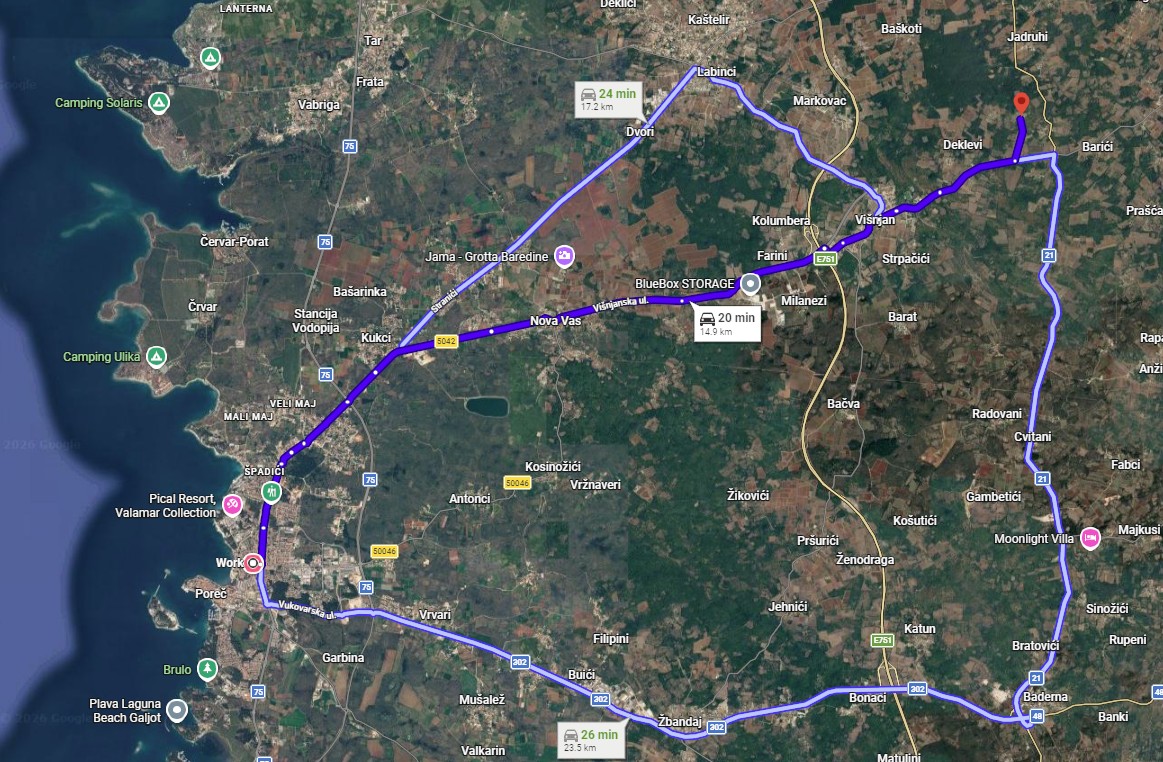
With small children and a return around midnight, many families prefer a private excursion with transfer. A driver picks you up at your accommodation, tickets are sorted in advance, and nobody drives home tired in the dark. At Velox, we most often pair Višnjan with an early dinner in Tinjan or Višnjan before the programme. For guests staying longer, we also arrange accommodation around Poreč.
8 tips for visiting with kids
- Book in advance — there's no entry without notice, whether in a group or individually.
- Check the forecast the day before; a clear sky changes the whole experience.
- Dress in layers — even in August, evenings on the hill are noticeably cooler than on the coast.
- Bring a blanket or mat for the meadow in front of the observatory.
- Explain the big-telescope rule in advance so there's no disappointment.
- No flash and no white torches — light ruins everyone's night-vision adaptation.
- Weigh up the age — the programme runs up to two hours in the evening, which is often too late for children under five.
- Let them nap in the afternoon if you're going to Perseid Night.
Conclusion
Višnjan Observatory with kids is the best outing for that evening when the kids have had enough of the sea and the sky is clear. In two hours, children get a lecture pitched to their age, a dome with a one-metre telescope and a stone circle thousands of years old. And there's a real starry sky with no city lights. All of it wrapped in the story of a team from a small Istrian town that helps protect the planet from asteroids.
Need help organising it? Get in touch for a private excursion with transfer, a booking for a specific date, or accommodation around Poreč.
Published: 26 September 2026