velox, Author at Velox
Cart
Item has been added to cart
Price:
Close
Pay now

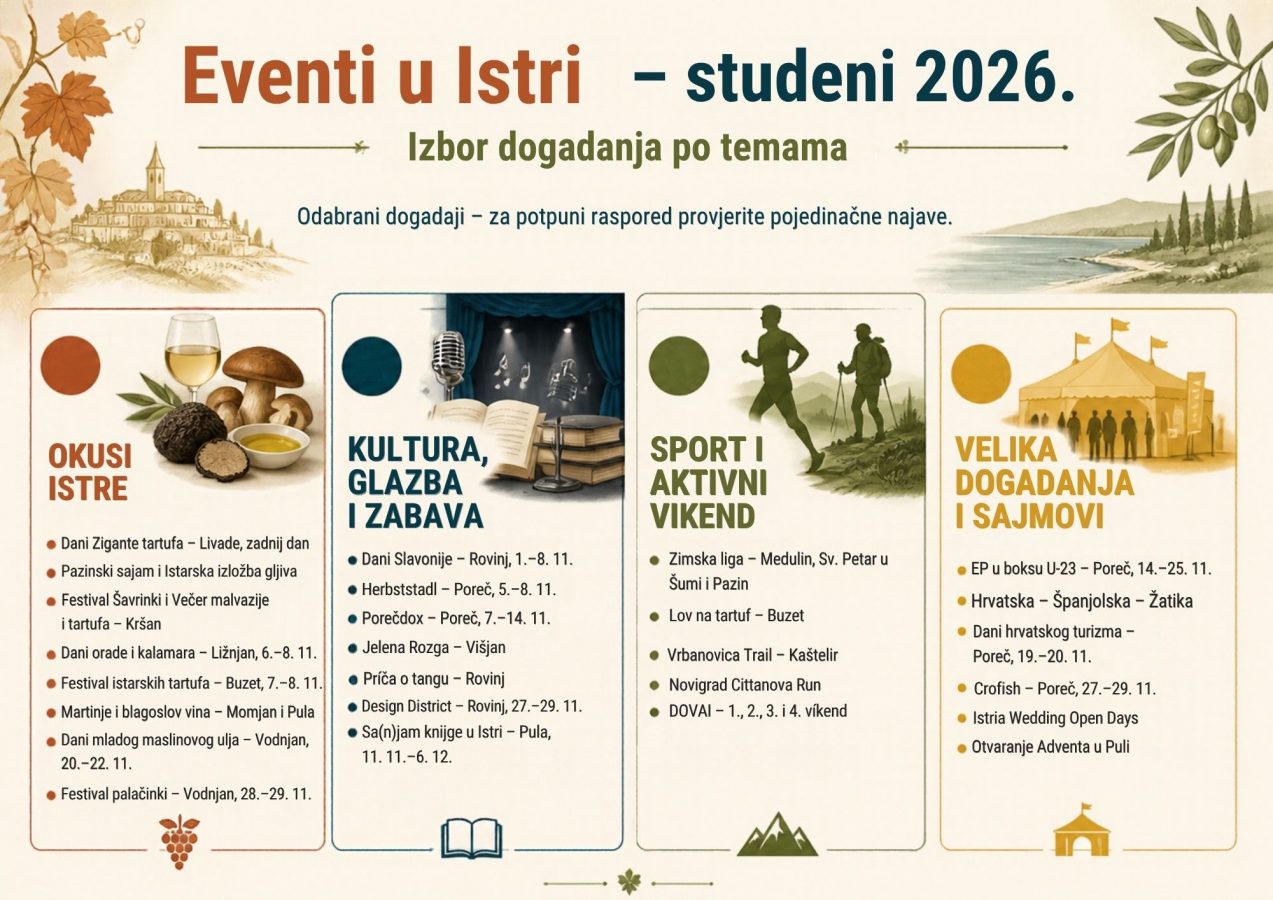
Events in Istria in November 2026: full calendar

Events in Istria in November 2026: what’s on and where to go November in Istria is the month of truffles, young wine and the first olive oil. Events in Istria in November 2026 bring more than 60 happenings across the whole peninsula. We have prepared a date-by-date overview with verified dates and official sources. It […]
Events in Istria in November 2026: what’s on and where to go

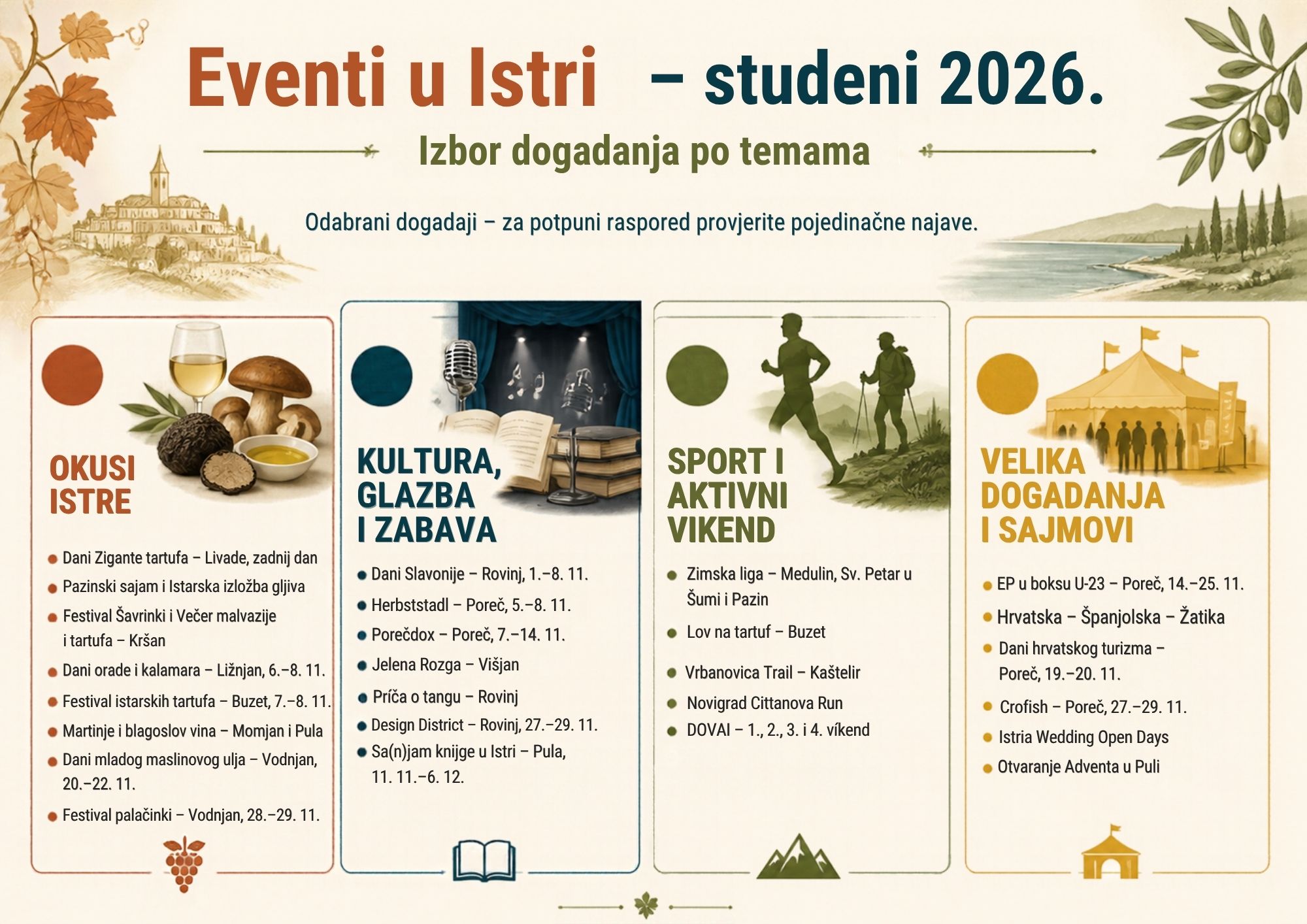
November in Istria is the month of truffles, young wine and the first olive oil. Events in Istria in November 2026 bring more than 60 happenings across the whole peninsula. We have prepared a date-by-date overview with verified dates and official sources. It covers the Istrian Truffle Festival, St. Martin’s Day in Momjan, the Young Olive Oil Days and St. Maurus. At the end you will find Advent opening dates for every Istrian town. Velox Tours from Poreč has followed the Istrian calendar for more than 30 years. That is why we added practical tips on accommodation, transfers and bookings.

Why November is a great month to visit Istria

The summer crowds are gone and accommodation is cheaper. Konobas are in full swing thanks to the truffle season. Winemakers open their cellars for St. Martin’s Day. Oil mills press the first young oil. Daytime highs in Istria in November are around 14 °C. The sea is still around 15 °C, so coastal walks are pleasant. Events in Istria in November therefore attract guests from Slovenia, Italy and Austria.

Our tip: book your accommodation early for the weekends of 7–8 and 14–15 November. The Truffle Festival and St. Martin’s Day take place then, so Buzet and Momjan are full.

Events in Istria in November: truffles and food festivals
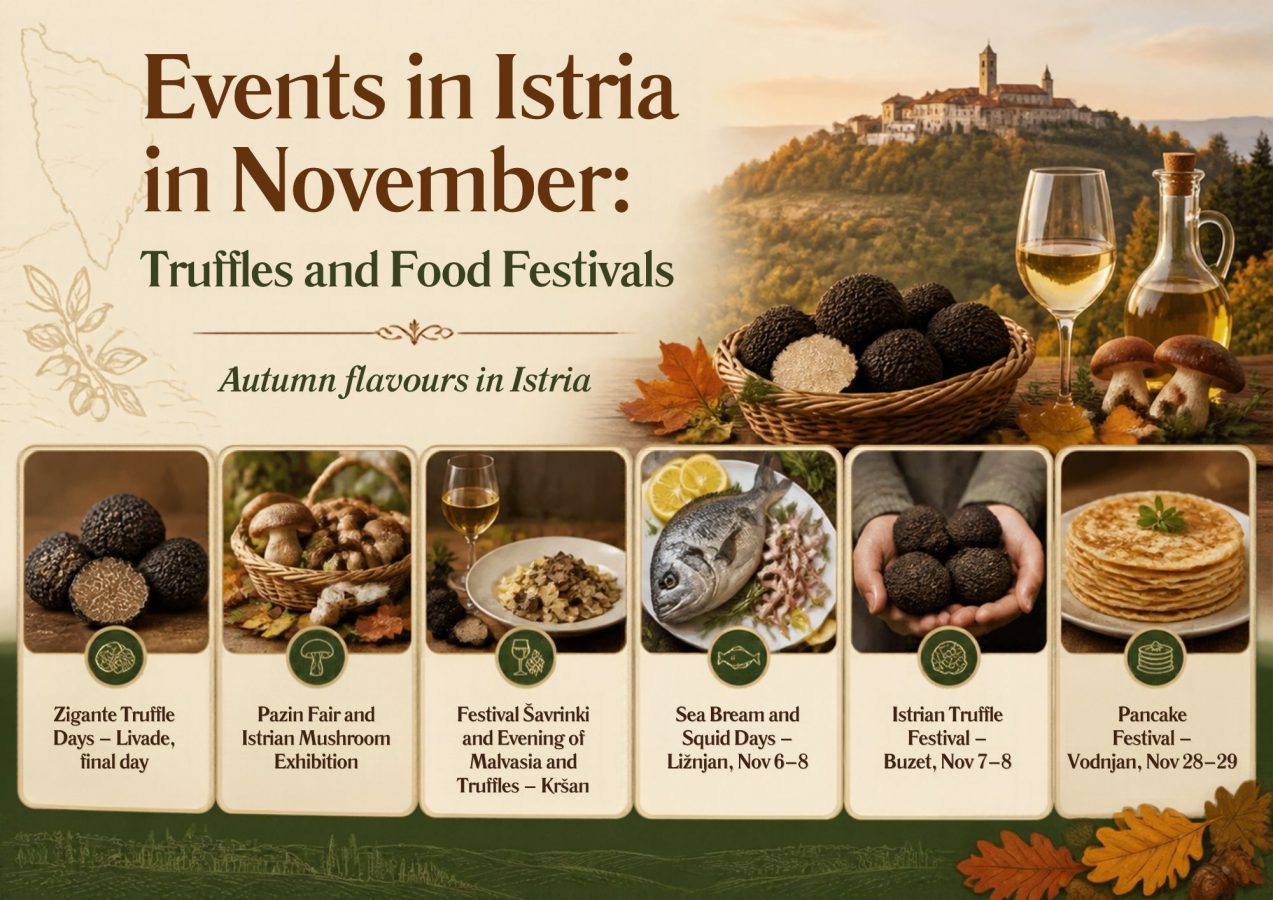
The white truffle season officially runs until 8 November. The Istrian White Truffle Days close with two major events.

Zigante Truffle Days, Livade – 31 October and 1 November

The final fair weekend in Livade runs from 10 am to 7 pm. Admission is free. The stalls offer fresh white and black truffles and local products. The highlight is a truffle-hunting demonstration by tourist train in the Motovun forest. The ride takes about 45 minutes. Adults pay €15, children €10.

Istrian Truffle Festival, Buzet – 7 and 8 November

The Istrian Truffle Festival takes place in the big tent at Mašimova škuja. The programme includes a truffle exhibition, tastings and sales of Istrian products. Buzet’s restaurateurs cook in the culinary show “Buzet na pjatu”. There is a kids’ corner for children. On Saturday 7 November the “Truffle Hunt” also starts, an orienteering race for pairs. Teams combine running and mountain biking, with a shovel and a dog as mandatory kit. The dog may be a plush toy.

Local tip: the 2026 season is poor in quantity because of the summer drought. The aroma, however, is excellent. First-class white truffles have reached €5,000 per kilogram. Buy smaller pieces and ask for proof of origin.

Sea Bream and Squid Days, Ližnjan – 6 to 8 November

Kuje Bay near Ližnjan celebrates the sea for three days. Admission to all events is free. Friday brings the opening with a pub quiz and concerts by Luzeri and S.A.R.S. Saturday features the Marlera Cup spearfishing competition and a concert by Luka Basi. Sunday is reserved for the “Kalamarijada”, a squid-cooking competition. New this year is a squid-risotto cooking contest.

DOVAI – Agritourism Open Days – every weekend in November

The Istrian Agritourism Open Days run on 7–8, 14–15, 21–22 and 28–29 November. Eight agritourisms take part, from Nedešćina to Vodnjan and Grožnjan. The promotional menu from aperitif to dessert costs €30. Booking directly with the agritourism is mandatory. Children can join the treasure hunt “Grandma Marija’s Lost Recipe”.

Other food evenings in November

  • Malvazija and White Truffle Evening, Stancija Stare staze, Kršan – 6 November from 7 pm. Baćac and Juričić wines with truffles, booking required.
  • Cabernet Sauvignon & Blue Fish, Poreč area – Fridays from 6 November to 4 December. The five-course dinner costs €55 per person. The 20 November date at Al Penon (Tar-Vabriga) still has seats. Most other dates are sold out.
  • Eastern Istria Olive Oil Show, Pićan – 28 November from noon. Cooking contest for “šugo od kokoše” (chicken sugo), oil and wine tastings, free admission.
  • Pancake Festival, Vodnjan – 28 and 29 November, free admission.

St. Martin’s Day 2026 in Istria: where young wine is christened
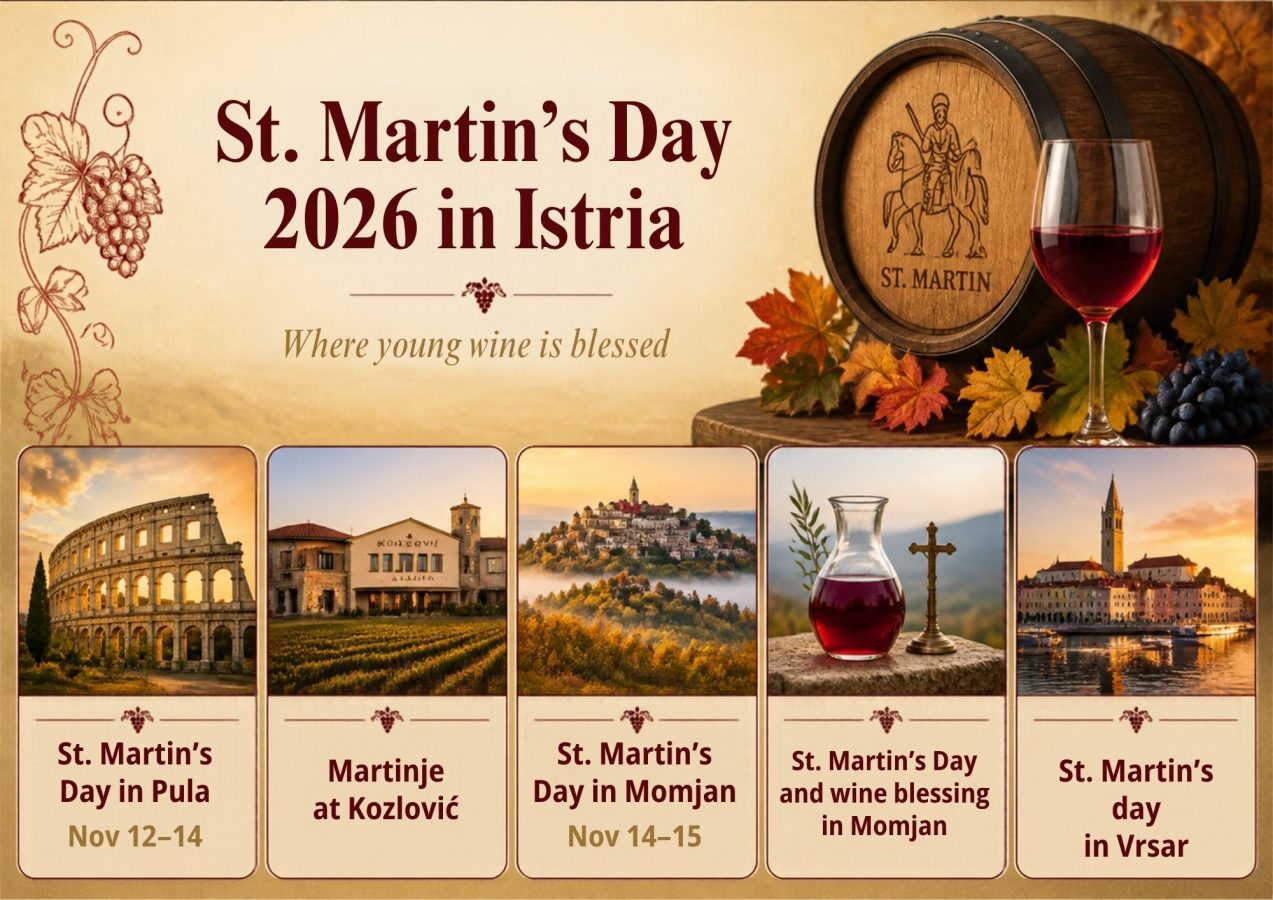
St. Martin is celebrated on 11 November, but the festivities last all week.

Feast of St. Martin, Vrsar – 7 to 11 November

Vrsar celebrates its patron saint with a rich programme. The main day is Saturday 7 November on Trg Degrassi. Registration for the “Martinje” family run opens at 9 am. The children’s race starts at 10:45, the 5 km race at 11:30. The family bike ride and Nordic walking also start at 11 am. All three activities are free and participants get lunch. From noon to 8 pm Mendule, La Contrada, Anelidi and Duo Gravity perform. The free Casanova Tour is at 2:30 pm, the Istrian soup contest at 4 pm. Sunday brings a table tennis tournament, 11 November a mass and ceremonial session.

St. Martin’s Day in Momjan – 11, 14 and 15 November

Momjan is the heart of Istria’s St. Martin’s Day and home of Momjan Muscat. The official programme was published by the Town of Buje. The young wine is blessed on Wednesday 11 November at 5 pm. On Saturday 14 November the programme runs all day. It includes a Momjan fritura contest and a walk along the Muscat trails. There is also a bucolaj workshop. Momjan wine tasting runs from 2 pm to 7 pm in the gastro tent. The evening brings Grooverse, Ivan Licul & Band and DJ Minić. On Sunday 15 November the MTB ride starts at 11 am. Brass music, Tomos vintage mopeds and children’s entertainment with a magician follow.Momjan is the heart of Istria’s St. Martin’s Day and home of Momjan Muscat.

St. Martin’s Day in Pula – 12 to 14 November

Pula’s Giardini turn into a wine street from 6 pm to midnight. Ten wineries from southern Istria present their wines, including Benazić, Dobran and Medea. Fritule and DJ music complete the picture.

Other St. Martin’s events

  • Kozlović Winery, Vale near Momjan – 14 November from 3 pm to 7 pm. Infinity Band plays, admission is free.
  • St. Martin’s Day in Višnjan – 14 November in Baškoti. The programme starts at 6 pm, followed by a Jelena Rozga concert in the evening. Tickets are on Entrio.
  • St. Martin’s Bike Ride, Vrsar – 7 November at 11 am (see above).

Young Olive Oil Days, Vodnjan – 20 to 22 November
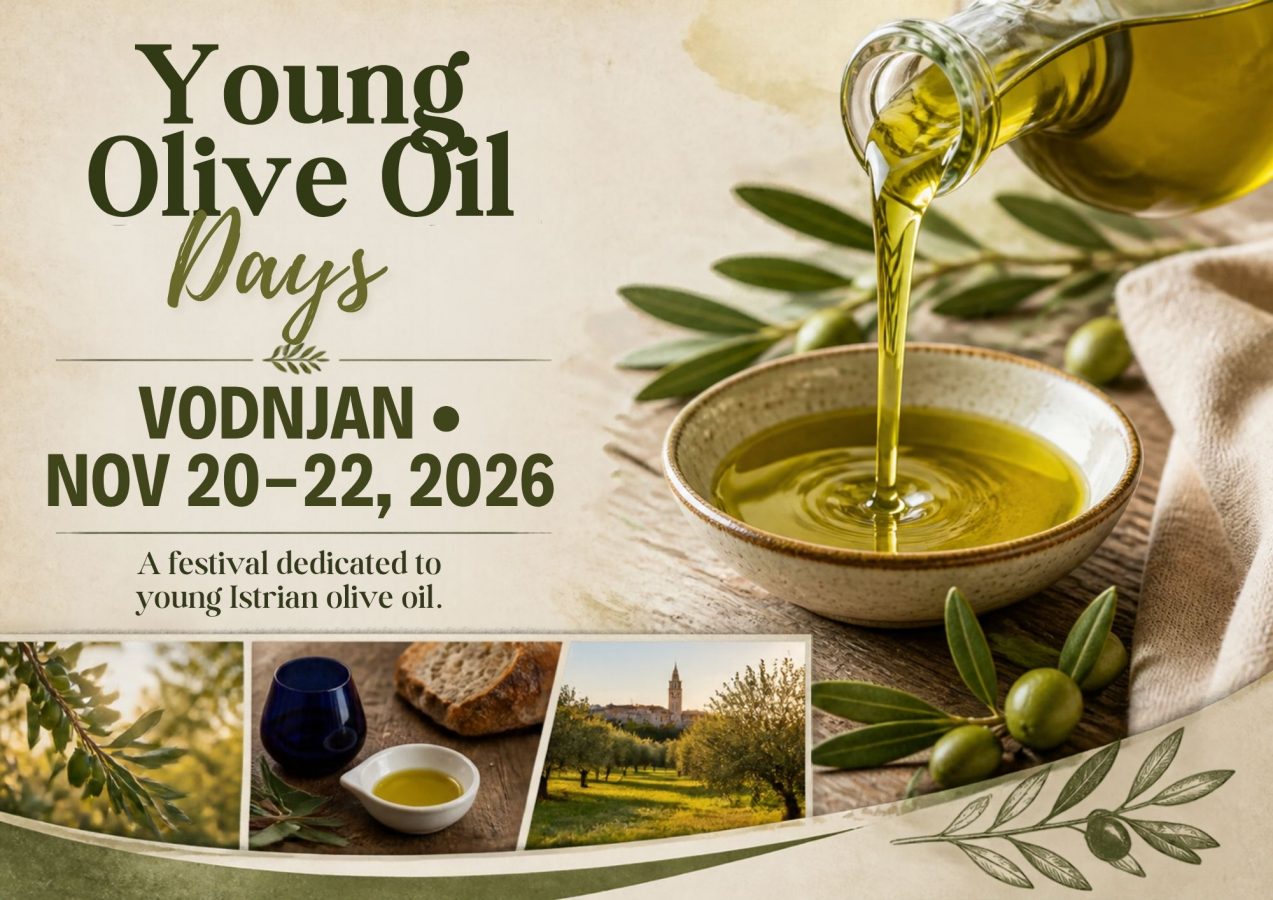
The 20th edition of the Young Olive Oil Days gathers 75 to 80 oil producers. The 1,750 m² tent expects more than 5,000 visitors. Young oils from the 2026 harvest are tasted, with masterclasses and lectures. New is the Vodnjan Mediterranean Forum with four panels over three days. Topics are regional development, olives in cosmetics and the future of fine dining. Flos Olei 2027 has just named Istria the world’s best olive oil region. It is the tenth such title.

St. Maurus – Poreč Town Day – 21 November

Poreč celebrates its patron St. Maurus on Saturday 21 November. The solemn mass is held in the Euphrasian Basilica, a UNESCO World Heritage site. A procession with the relics through the old town follows. The squares host music and presentations of local customs. The Town of Poreč will publish the detailed programme later. The same day is Theatre Night across Croatia.

Culture in November: festivals, theatre and concerts
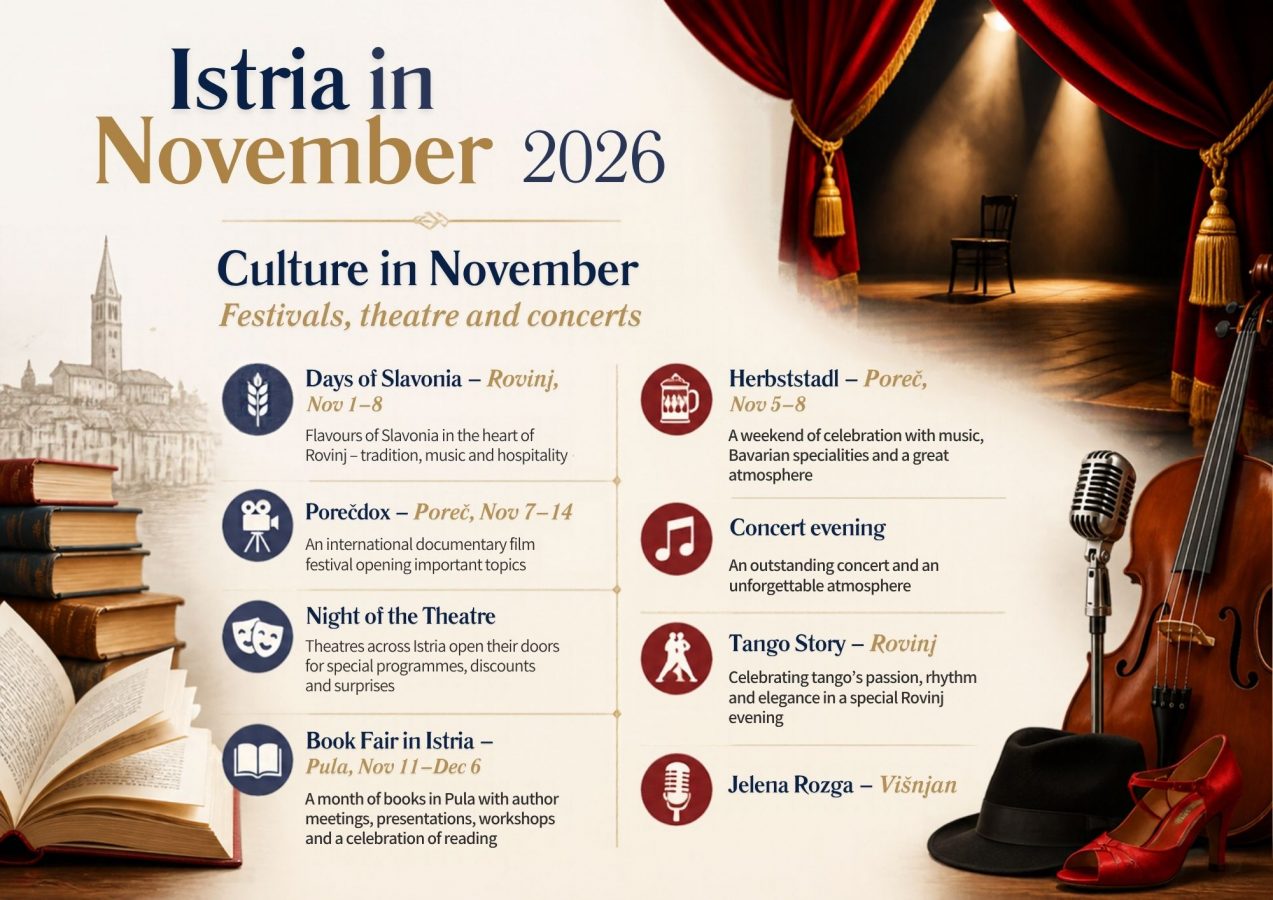
Events in Istria in November are not only about food. Here is the cultural programme by town.

  • Days of Slavonia in Rovinj – 1 to 8 November, waterfront, 8 am–6 pm. Honey, cheese, brandies and cured meats from Slavonia and Baranja.
  • Istrian Mushroom Exhibition, Pazin – 3 November at the town market, 8 am–3 pm. Free mushroom stew at 11:30.
  • Herbststadl, Poreč – 5 to 8 November at Žatika hall. Schlager festival with Nik P., Nockis and Stefan Mross. A favourite with Austrian and German guests.
  • Šavrinke Festival, Račja Vas (Ćićarija) – 6 November. Workshops and guided tours, free admission.
  • Porečdox – 7 to 14 November at POU Poreč. Documentary film festival, most screenings are free.
  • Klapa festival “Puna mi Pula” – 7 November, 7:30 pm, Dom hrvatskih branitelja. Free admission.
  • 30 years of the Mendule choir, Vrsar – 14 November, 7 pm, Saline hall. Free admission.
  • Zvjezdan Ružić, Pazin – 14 November at 8 pm, Spomen dom.
  • Theatre Night – 21 November. Umag stages the drama “Peti korak” already on 20 November. The children’s musical “Zalutali u bajci” plays on 21 November at 11 am. Pula performs “Ljudski glas” at the INK theatre.
  • Music lesson “The Story of Tango”, Rovinj – 25 November, 6 pm, MMC. Free admission.
  • Sa(n)jam knjige u Istri book fair, Pula – 27 November to 6 December. The 32nd edition takes place at Dom hrvatskih branitelja. The fair is open daily from 9 am to 9 pm. The motto is “La vita è bella” and the children’s programme is “Hop lektira”.
  • Thursdays at the Museum, Pazin – every Thursday at 6 pm until 3 December. Free admission.

Fairs and professional events

  • Pazin Fair – Tuesday 3 November from 7 am, the traditional monthly market.
  • Days of Croatian Tourism, Poreč – 19 and 20 November at Pical Resort. The biggest gathering of Croatian tourism with 1,200 participants and the annual awards.
  • Crofish, Poreč – 27 to 29 November at Žatika. Croatia’s only fisheries and sport-fishing fair.
  • Design District Croatia, Rovinj – 27 to 29 November, former Tobacco Factory, 10 am–6 pm. Furniture and equipment for apartments and hotels. Useful for property owners.
  • Istria Wedding Open Days – 28 and 29 November. Open wedding venues across Istria and a suppliers’ fair at Pical.

Sport in November: races, bike rides and big tournaments
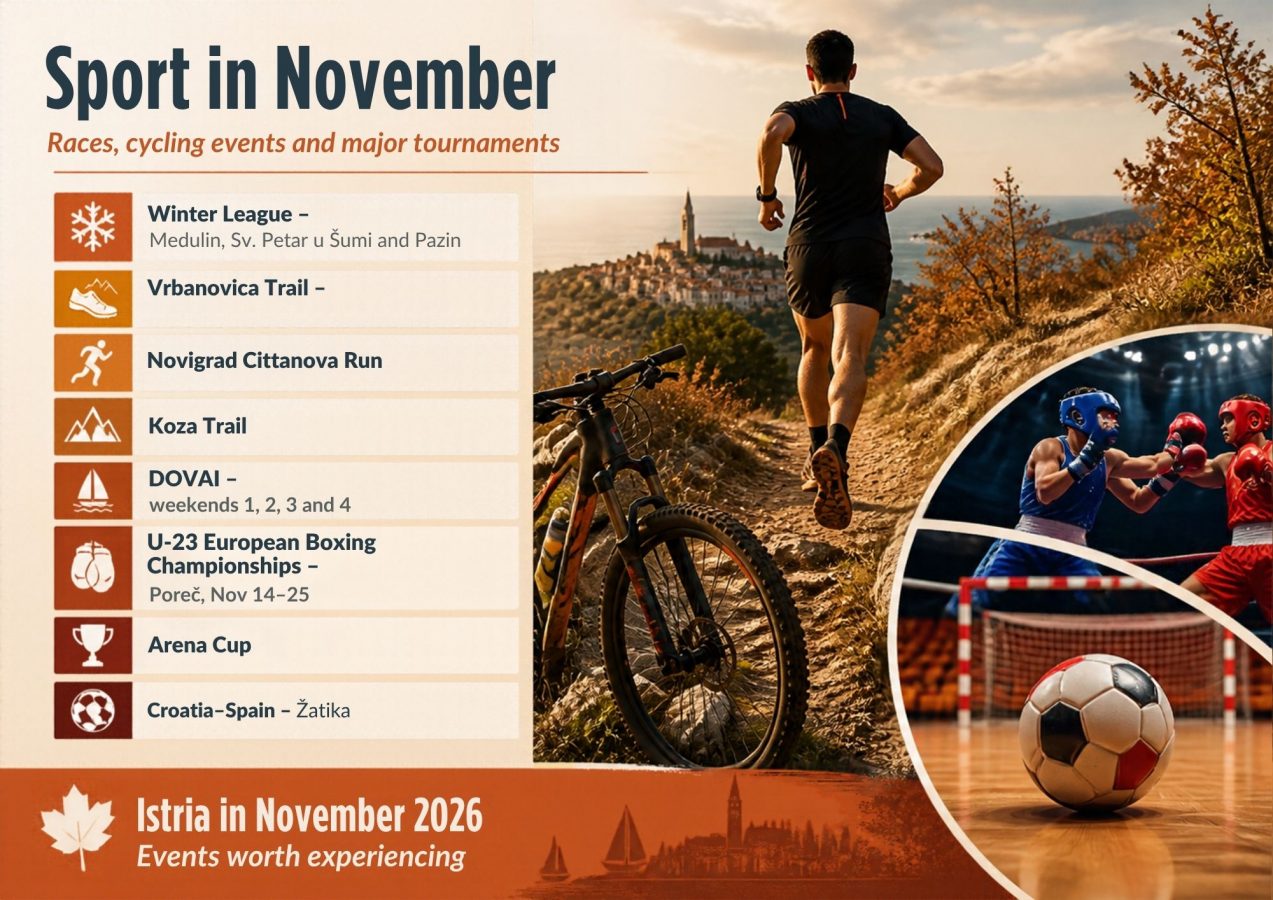
November’s sports calendar is packed, so we gave it a separate blog. Here are the key dates.

  1. Istrian Winter Running League – 8 Nov Medulin, 22 Nov Sv. Petar u Šumi, 29 Nov Pazin. Register at trickeri.org.
  2. European U-23 Boxing Championships, Poreč – 14 to 25 November, Intersport hall.
  3. Croatia – Spain, women’s EuroBasket qualifier – 17 November, Žatika Poreč.
  4. Arena Cup, Pula – 13 and 14 November, the season’s final cruiser regatta.
  5. Koza Trail, Bičići – 14 November.
  6. Vrbanovica Trail, Kaštelir – 28 November, with the Istrian Open Trail Championship.
  7. Novigrad Cittanova Run – 29 November, half marathon, 10 km and 5 km.

Advent 2026 in Istria: opening dates by town
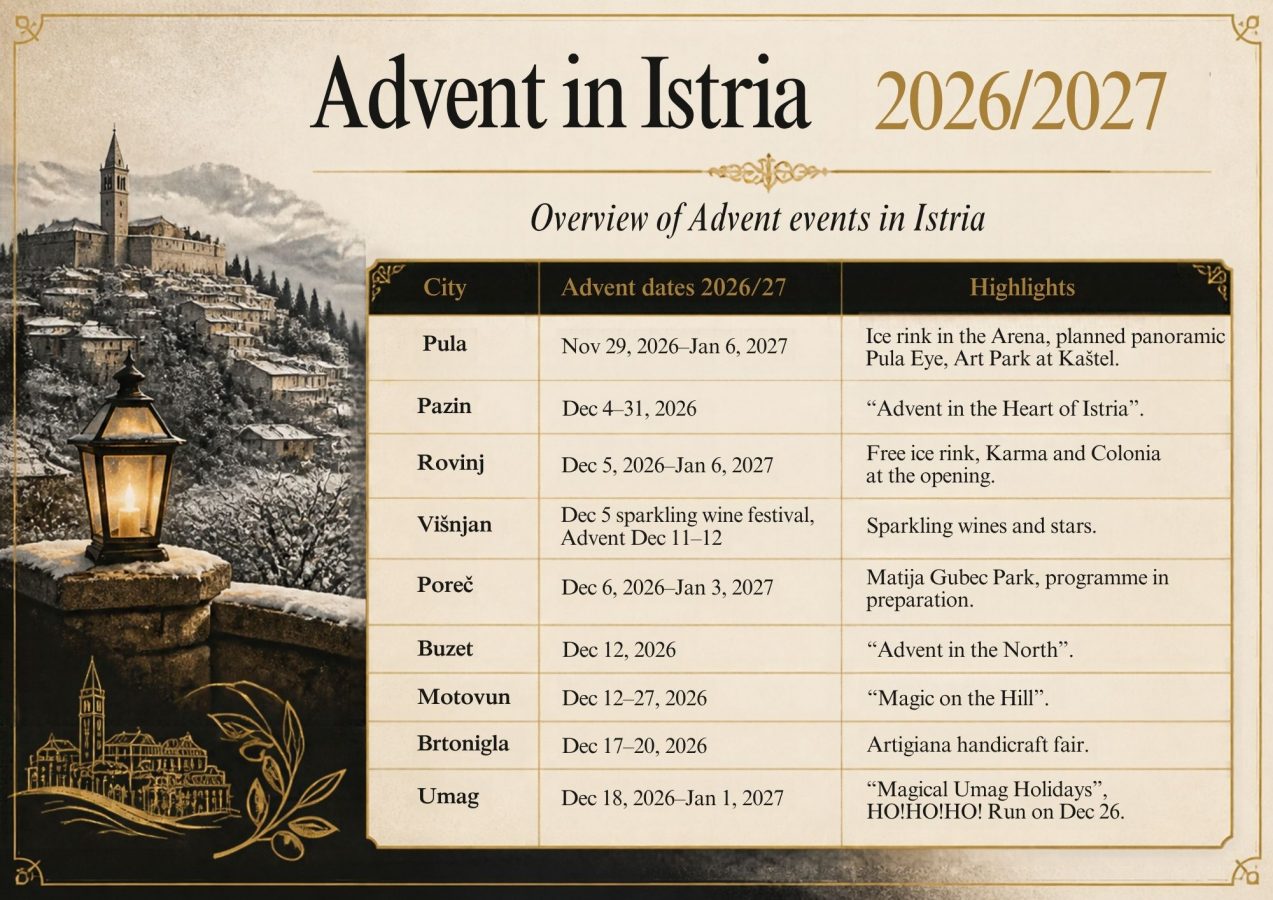
Events in Istria in November turn into Advent programmes at the end of the month. These are the officially published dates so far.

Advent in Pula moves this year to a new zone. It stretches from the Arena to Titov park. The concert programme and ice-rink prices will be published later.

Velox Tours tips for November 2026 in Istria

  • Accommodation: many hotels close in mid-November. Private apartments and agritourisms stay open all year. Velox Tours offers verified apartments in Poreč and the surroundings.
  • Transport: events in Istria in November are often inland, far from the coast. Arrange a transfer or a private excursion with a driver. That way you can taste the wine freely.
  • Bookings: food evenings and agritourisms require advance notice. The “Cabernet & Blue Fish” dinners are mostly sold out already.
  • Weather: November brings rain on about ten days on average. Outdoor festivities are cancelled in heavy rain, so check the organisers’ updates.
  • Truffle hunting: instead of the fair crowds, book a private hunt with a truffle hunter. Velox organises excursions with transfer from Poreč.

November 2026 events calendar at a glance

  • 1–8 Nov Days of Slavonia in Rovinj
  • 1 Nov Last day of the Zigante Truffle Days, Livade
  • 3 Nov Pazin Fair and Istrian Mushroom Exhibition
  • 5–8 Nov Herbststadl, Poreč
  • 6 Nov Šavrinke Festival; Malvazija and Truffle Evening, Kršan
  • 6–8 Nov Sea Bream and Squid Days, Ližnjan
  • 7 Nov Feast of St. Martin, Vrsar; Truffle Hunt, Buzet; “Puna mi Pula”
  • 7–8 Nov Istrian Truffle Festival, Buzet; DOVAI, 1st weekend
  • 7–14 Nov Porečdox, Poreč
  • 8 Nov Winter League, Medulin
  • 11 Nov St. Martin’s Day – wine blessing in Momjan; mass in Vrsar
  • 12–14 Nov St. Martin’s Day in Pula
  • 14 Nov St. Martin’s at Kozlović; Jelena Rozga, Višnjan; Arena Cup; Koza Trail
  • 14–15 Nov St. Martin’s Day in Momjan; DOVAI, 2nd weekend
  • 14–25 Nov European U-23 Boxing Championships, Poreč
  • 17 Nov Croatia – Spain, Žatika
  • 19–20 Nov Days of Croatian Tourism, Poreč
  • 20–22 Nov Young Olive Oil Days, Vodnjan
  • 21 Nov St. Maurus, Poreč; Theatre Night
  • 21–22 Nov DOVAI, 3rd weekend
  • 22 Nov Winter League, Sv. Petar u Šumi
  • 25 Nov “The Story of Tango”, Rovinj
  • 27–29 Nov Crofish, Poreč; Design District, Rovinj
  • 27 Nov–6 Dec Sa(n)jam knjige u Istri book fair, Pula
  • 28 Nov Vrbanovica Trail, Kaštelir; Olive Oil Show, Pićan
  • 28–29 Nov Pancake Festival, Vodnjan; Istria Wedding Open Days; DOVAI, 4th weekend
  • 29 Nov Advent opening in Pula; Novigrad Cittanova Run; Winter League, Pazin

Events in Istria in November 2026 prove that the season does not end in September. Need accommodation, a transfer or a private excursion? Contact Velox Tours and we will gladly put together your Istrian November.

Published: 05.11.2026.
New Rules for Hosts in 2027

The year 2027 brings the biggest changes for private accommodation in ten years. New rules for hosts in 2027 are coming. A mandatory registration number for listings on Booking and Airbnb is being introduced. A completely new Hospitality Act with recategorisation every ten years is on the way. The Government proposes extending temporary permits until […]

The year 2027 brings the biggest changes for private accommodation in ten years. New rules for hosts in 2027 are coming. A mandatory registration number for listings on Booking and Airbnb is being introduced. A completely new Hospitality Act with recategorisation every ten years is on the way. The Government proposes extending temporary permits until the end of 2030. The flat tax per bed is also rising in the most developed destinations. Below is an overview of what has been adopted and what is still in parliament. Find out what you can do by the end of 2026 to be ready for the 2027 season.

Registration number: no listing on platforms without it

The biggest change comes from the European Union. The obligation stems from the EU regulation on short-term rental services. The regulation has applied since 20 May 2026. Croatia is implementing it through the new Hospitality Act. It covers natural and legal persons renting out rooms, apartments and holiday homes. It applies to everyone listing them on short-term rental platforms. The number will need to be obtained and displayed during 2027. Obtaining it will be free, digital and simple. The number is issued on request by the Ministry of Tourism and Sports.

The procedure will run through the existing eTurizam system. The categorisation decision is attached to the application. If the host has none, the system automatically offers a categorisation request. The penalties are serious. Natural persons face fines of 2,000 to 6,600 euros for listing without a registration number. Platforms that fail to report an invalid number pay 13,000 to 130,000 euros. Alternatively, the fine is 1 to 6 percent of revenue. If the number is fake or missing, the platform must remove the listing.

Important: the obligation is not yet in force. On 21 October 2026, the Government adopted the final draft of the law. The registration number provisions are planned to apply from 1 May 2027. This gives hosts and platforms time to adapt. All official information is published by the Ministry of Tourism and Sports.

New Hospitality Act: what is changing

The Government sent the Draft Hospitality Act to Parliament at the end of June 2026. The final draft was adopted on 21 October 2026 and goes to a second reading. Entry into force is planned for 1 January 2027. The SMOi association filed a submission with the European Commission through the TRIS notification procedure. It asks for a review of the law’s compliance with EU law before adoption. The text may still change in the second reading, but the direction is clear.

Recategorisation every ten years.

For private hosts, recategorisation will be mandatory every ten years. Hotels and campsites go through the procedure every five years. The deadline starts when the ordinance on minimum requirements enters into force. The minister has yet to issue that ordinance. Those who fail to meet the requirements bear the costs of the procedure. Local government decides on categorisation. Town and municipal councils may restrict or ban categorisation for certain types of property. Those types will then no longer be eligible for categorisation. The provision builds on the Destination Management Plans of the tourist boards.

End of transferring categorisation to a spouse. After deregistration, the host and close family cannot immediately obtain a new decision. This applies to spouses, common-law partners, life partners and children. A new decision is possible only one year after the approval is revoked.

Obligations, stricter supervision and higher fines!

Unpaid tourist tax means losing the decision. The debt status is determined as of 31 March of the current year for the previous year. Anyone with outstanding obligations by that date loses the categorisation decision

Wider supervision. Alongside the State Inspectorate, the Customs Administration and municipal wardens will also carry out checks. In protected areas, nature rangers will supervise too. Indicators of unregistered renting include frequent registrations of different people throughout the year. Others are increased water and electricity consumption, third-party reports, listings and guest reviews.

Higher fines for operating without a decision. Companies and sole traders face fines of 5,500 to 20,000 euros for operating without a decision.

Hospitality businesses and residential premises. Legal persons and sole traders will no longer be able to obtain new decisions for apartments and rooms in residential premises. All administrative procedures move exclusively to the eTurizam system.

The full draft and submitted comments are available on the e-Savjetovanja portal.

Co-owners’ consent and the concept of host

This obligation has been in force since 2025 and enters the third year of the deadline in 2027. For short-term rental of flats in buildings, written co-owner consent is a condition for the decision. Existing hosts must obtain it within five years of the law entering into force. Consent from two-thirds of co-owners by ownership share is required. The consent term may not be shorter than five years. Anyone who fails to submit consent on time loses the decision to operate. A person renting a flat in a multi-apartment or mixed-use building is not considered a host.

Do you work with us? Don’t wait. Get in touch and we will prepare the co-owner consent documentation for you!

Temporary permits: the Government proposes an extension until the end of 2030

Hosts without completed legalisation operate on the basis of temporary permits. Under current law, these permits are valid until 31 December 2026 at the latest. New applications have not been accepted since 1 January 2025.

On 21 October 2026, the Government adopted the final draft of the Hospitality Act. It extends temporary permits until 31 December 2030. That is four years more than the current deadline. The extension affects around 15,000 hosts. It was one of the main demands of family host associations. The aim is to give hosts time for legalisation and permanent decisions. Counties will report the number of temporary permits to the Ministry every year by 30 June.

Important: the extension is not yet in force. The draft law has been sent to Parliament for a second reading. Until the law is passed, the 31 December 2026 deadline applies. Counties continue to urge hosts to submit applications on time. Our advice: don’t wait for 2030. If you can complete legalisation, do it now. The extension is a safety net, not a reason to delay.

Flat tax per bed rises by 50 percent

Along with the new rules for hosts in 2027 come tax changes. On 10 September 2026, the Government sent a tax package to Parliament. If adopted, it would apply from 1 January 2027. In category 1 of the Tourism Development Index, the range rises from 100–300 to 150–300 euros per bed. In category 2, it rises from 70–200 to 100–200 euros. The third (30–150 euros) and fourth categories (20–100 euros) remain unchanged. If a municipality makes no decision, the statutory amount rises from 200 to 225 euros. In category 2, it rises from 135 to 150 euros.

Most coastal destinations fall into the first two categories. Most municipalities and towns have so far chosen the legal minimum. In practice, this means a 50 percent higher flat tax for most hosts. The final amount within the range is set by each municipality or town by its own decision. Current amounts and rules are published by the Tax Administration.

Fiscalisation 2.0 and eInvoicing: who is affected

This topic causes the most confusion and it is worth clarifying. A private host on flat-rate tax is not subject to fiscalisation or eInvoicing. This applies in both 2026 and 2027. An invoice must still be issued to the guest at every payment. It is different for sole traders and companies. VAT payers have been in the eInvoicing system since 2026. From 1 January 2027, the obligation also applies to businesses outside the VAT system. It concerns B2B transactions. Do you rent through a sole trade or limited company? Secure eInvoicing software by the end of the year.

Anchor prices and a digital price list on your website

The decisions on anchor prices and price list publication were published in Official Gazette 101/2026. They were due to apply from 1 October 2026. The Government amended them on 29 September 2026 (OG 110/2026). Application now begins on 17 November 2026. The reference date remains 10 September 2026. The price displayed is the one valid on that day, not the price on the start date.

The Ministry recommends stating only the date, without the label “anchor price” or “additional price”. For example: “Price on 10/09/2026”. On the same day, the base prices under the Consumer Protection Act also take effect. The obligation thus ceases to be a temporary measure and becomes permanent.

For hosts, the Ministry of Economy’s clarification is key. The obligation does not apply to accommodation prices in own booking systems. Nor does it apply on intermediary rental platforms. Platforms do not display an additional price for third-party services. They anchor only their own services charged directly to the consumer. The nightly rate on Booking, Airbnb or your own booking system needs no anchor price.

However, small hosts are also subject to anchor prices. The exception covers only the accommodation price in booking systems. Additional services with a fixed price must also show the price from 10 September 2026. These include final cleaning, pets or bicycle rental. The anchor price is displayed even when it equals the current price.

Important: Anyone with their own website must publish a price list there in XML or CSV format. The obligation applies even if the website serves only as a business card. An Instagram or Facebook profile does not count as a website. The price list must be publicly accessible without login. It is updated by 8 a.m. after any price change. Each version remains available for 30 days. A PDF price list is not enough. Supervision is carried out by the State Inspectorate.

Fines go up to 30,000 euros for legal persons and 20,000 for sole traders.

Rules for hosts 2027: what to do by the end of 2026

  1. Settle your tourist tax and tourist board membership fee — from 2027, debt means losing your categorisation.
  2. Check that you hold a regular categorisation decision. The extension of temporary permits to 2030 applies only once the law is passed.
  3. If you rent a flat in a building, start collecting written co-owner consent.
  4. Follow your municipality’s or town’s decision on the new flat tax per bed.
  5. If you operate through a sole trade or company, prepare an eInvoicing system.
  6. If you have a website, publish a price list in XML/CSV format by 17 November 2026. For additional services as well show the price from 10 September 2026.
  7. Prepare documentation for the registration number. Application is planned from 1 May 2027. Follow the announcements of the Ministry of Tourism and Sports.

Conclusion

The new rules for hosts in 2027 do not ban short-term rentals. They do, however, place them in a much stricter framework. The registration number, recategorisation, stricter supervision and a higher flat tax are coming. If the law passes, temporary permits gain four more years. Those who are properly categorised and pay their dues on time enter 2027 without fear. Want someone to keep track of regulations, guests and platforms for you? Take a look at our carefree rental offer for apartments and villas in Istria. Velox Tours has worked with hosts in Istria for over 30 years. We help them start every season prepared.

Published: 26/10/2026

Višnjan Observatory with Kids: A Night Among the Stars

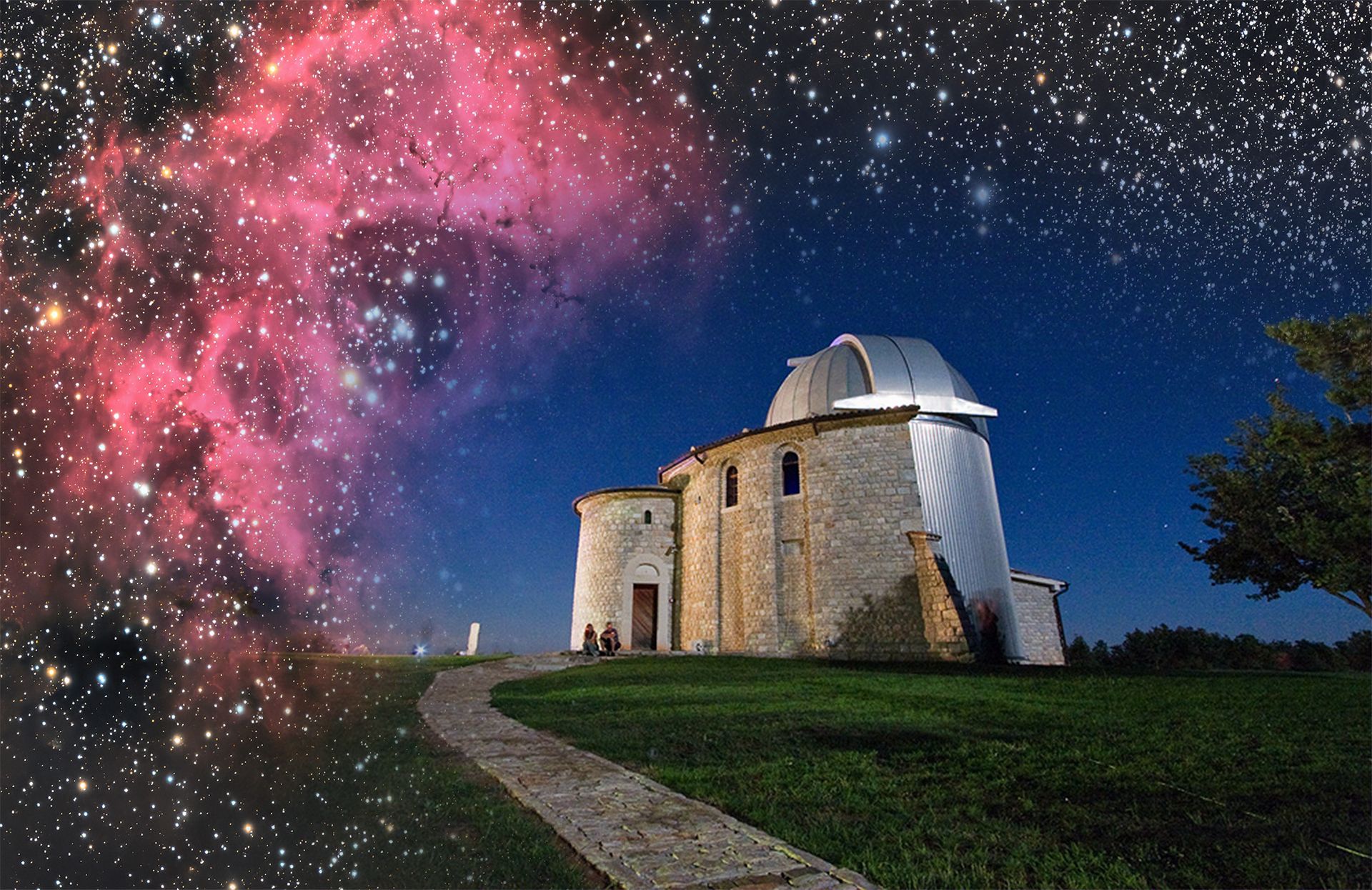
Višnjan Observatory with kids is an outing children talk about for weeks. Some twenty minutes from Poreč, on Tićan hill, sits one of the world’s most successful observatories in the hunt for asteroids. The evening programme is open to ordinary families too. Children step into the dome with its one-metre telescope and walk through a […]

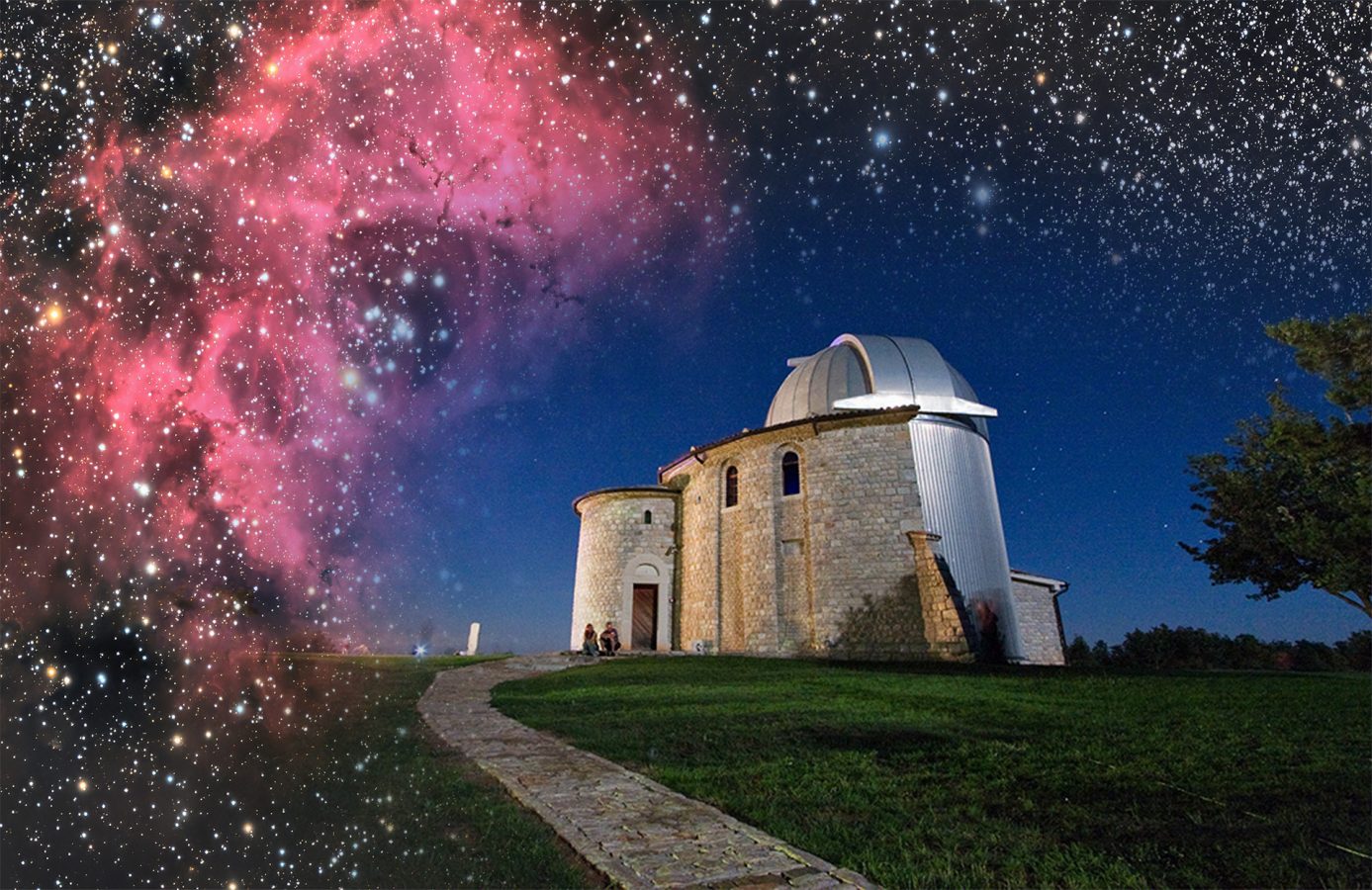
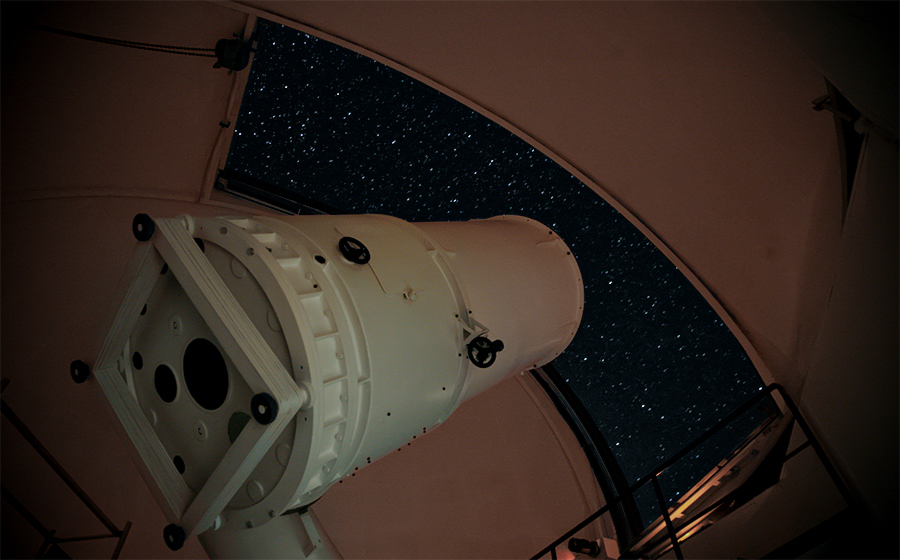
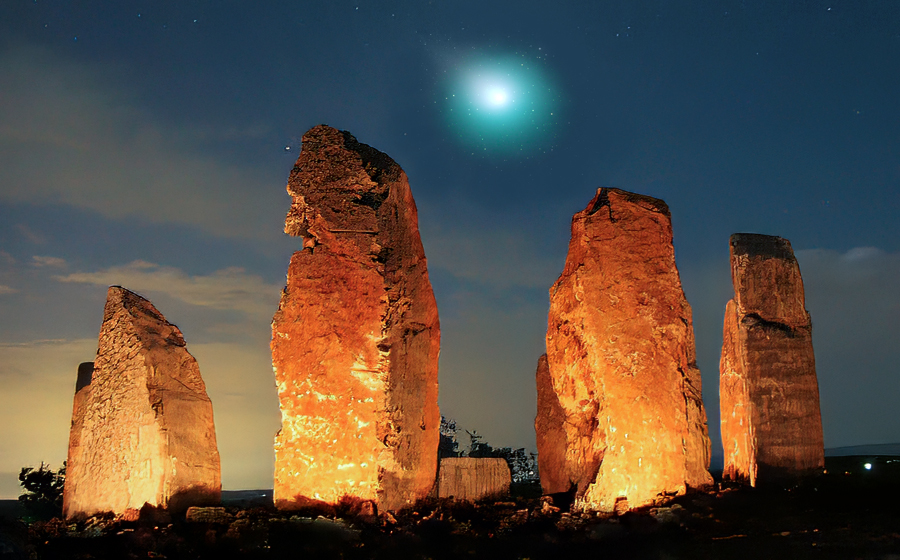
Višnjan Observatory with kids is an outing children talk about for weeks. Some twenty minutes from Poreč, on Tićan hill, sits one of the world's most successful observatories in the hunt for asteroids. The evening programme is open to ordinary families too. Children step into the dome with its one-metre telescope and walk through a stone circle reminiscent of Stonehenge. Under a true night sky, they learn to recognise constellations with the help of a laser "pointer". Here's what it looks like and what you need to know before booking.

Why Višnjan Observatory with kids is not a typical museum

There are no display cases or information boards to read here. This is a working scientific station where asteroids are actually tracked every clear night. Visitors enter that world through a guided programme. Višnjan Observatory and the Višnjan Astronomical Society are non-profit organisations with a fifty-year tradition. Together with their sister organisations, they run a range of educational projects across the entire STEAM field. The focus is on working with highly motivated and gifted pupils.

For children, that means the story isn't told by a guide reading from a script, but by the people who actually do the work. And you can feel it.

Astro Night: what the programme looks like step by step

A lecture tailored to the age group

The programme opens with a lecture. Topics are chosen from astronomy and the observatory's own field of work. For groups, the lecture is adapted to the age of the audience — the Solar System, the "spaceguard" programme and so on. Younger children get a story about planets and asteroids; older ones get concrete facts about how a dangerous object is detected.

The dome and the Dagor telescope

Next comes a tour of the observatory and the dome. Children stand beneath the one-metre telescope named Dagor. It was mounted in 2002, saw first light in trial operation in 2014 and entered full operation at the end of 2017.

Important for managing expectations: the main telescope in the dome is used exclusively for research and visitors do not look through it. Tell the children in advance so there's no disappointment. The dome is still impressive because it is enormous and opens up right in front of them.

Observing and a laser tour of the constellations

If the weather allows, visible celestial objects are observed through an amateur telescope on the meadow in front of the observatory. The evening closes with a guided tour of the constellations using a laser. That green beam "drawing" across the sky is regularly the children's favourite part of the night.

The programme lasts between one and two hours, depending on group size and weather conditions.

The stone circle: Istria's Stonehenge

Next to the observatory stands an installation that looks like a miniature copy of Stonehenge. It is a reconstruction of a prehistoric sanctuary and solar observatory from the archaeological site of Mali sv. Anđeo near Poreč. The stone circle is part of the tour and is perfect for explaining how people measured time before clocks. Children grasp the idea instantly when they see the stones aligned with the Sun.

Asteroid hunters: the story that wins kids over immediately

Numbers that impress

There really is a "spaceguard" here. From the observatory, 1,447 new asteroids and 2 comets have been discovered. On top of that, 1,904 follow-up observations have been carried out to determine the orbits of dangerous asteroids and objects. In less than two years of operation, the new observatory on Tićan reached 15th place in the overall world ranking. The criterion is the number of published follow-up observations for determining the orbits of newly discovered hazardous objects. Looking only at the period since the telescope entered operation, that's a high 3rd place.

Translated into kids' language: this is a place that helps make sure we don't get surprised by a rock from space. No child stays indifferent to that.

Asteroids with Croatian names

The observatory is run by Korado Korlević, a teacher and astronomer born in Poreč. The Minor Planet Center credits him with the discovery of 1,162 numbered minor planets at Višnjan Observatory between 1996 and 2001. Add to that the co-discovery of a further 132 minor planets and two comets. Some of the discovered asteroids carry Croatian names — for example 10645 Brač, along with 11706 Rijeka and 12512 Split.

A great game for the drive home: have the children come up with the Istrian place they'd name their own asteroid after.

Programmes for kids who want more

Youth Science Camp and the Višnjan School of Astronomy

If your child "gets hooked", Višnjan is an address with a serious tradition. The first school of astronomy was organised in 1989 and was soon renamed the Višnjan School of Astronomy (VSA). In 2001 the Summer School of Science was introduced. Since 2002, the programmes have been open to primary-school pupils as well, through the development of the Youth Science Camp. All programmes are organised as residential camps for highly motivated pupils, and 3,497 participants have passed through them since 1989.

Explora Explorers' Club and the forest kindergarten

For local families there is a year-round option too. The Explora Explorers' Club was founded in 2007 to protect the biodiversity of the Mirna river estuary wetlands. It runs as a half-day Saturday activity during the school year. In 2013, pre-schoolers joined the club as well, through an eco-science forest kindergarten.

Tickets, bookings and dates

Višnjan Observatory with kids comes with one rule above all others: book ahead.

  • Individuals and families: dates for the astro-tourism programmes are published on the observatory's website, where tickets are purchased online to secure a place. The price is €15 per person, €10 for children up to 12, and children up to 6 enter free. Check prices when booking, as they vary by programme and season.
  • Groups: group visits are possible year-round with mandatory advance notice — and leave the organisation to us!

The programme depends on the weather — on a cloudy night the lecture and tour still take place, but there is no observing.

Perseid Night and Astrofest

Two dates in the year are special. "Perseid Night" is held on 12 August, with observation of the meteor shower, a lecture by Korado Korlević and an evening under the stars. If your children are going to see their first "shooting star", this is the night — but expect crowds and book early.

In addition, Astrofest, an annual festival, is held on Tićan.

How to get there from Poreč and the surrounding area

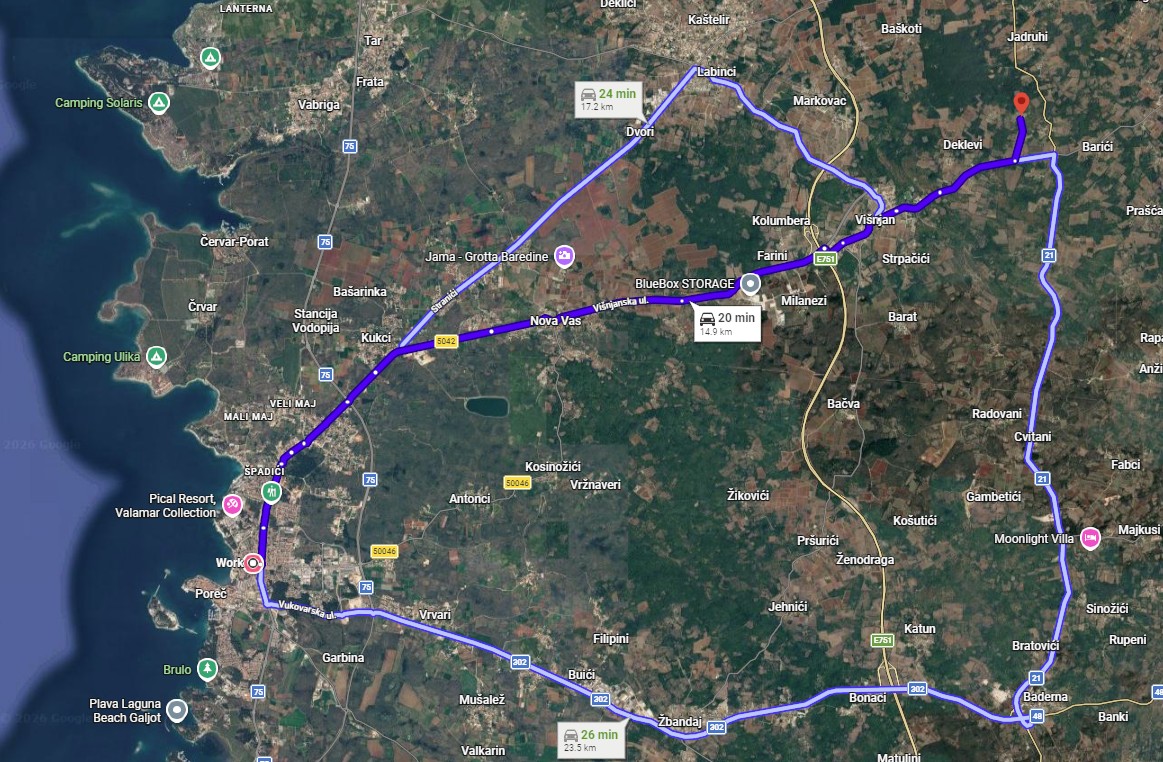
The observatory is located three kilometres north of Višnjan, on Tićan hill. Scientific activities moved there in 2017 because of light pollution. From Poreč it's about a twenty-minute drive along narrow Istrian roads. The final stretch of the approach is poorly lit — which is the whole point of the location.

With small children and a return around midnight, many families prefer a private excursion with transfer. A driver picks you up at your accommodation, tickets are sorted in advance, and nobody drives home tired in the dark. At Velox, we most often pair Višnjan with an early dinner in Tinjan or Višnjan before the programme. For guests staying longer, we also arrange accommodation around Poreč.

8 tips for visiting with kids

  1. Book in advance — there's no entry without notice, whether in a group or individually.
  2. Check the forecast the day before; a clear sky changes the whole experience.
  3. Dress in layers — even in August, evenings on the hill are noticeably cooler than on the coast.
  4. Bring a blanket or mat for the meadow in front of the observatory.
  5. Explain the big-telescope rule in advance so there's no disappointment.
  6. No flash and no white torches — light ruins everyone's night-vision adaptation.
  7. Weigh up the age — the programme runs up to two hours in the evening, which is often too late for children under five.
  8. Let them nap in the afternoon if you're going to Perseid Night.

Conclusion

Višnjan Observatory with kids is the best outing for that evening when the kids have had enough of the sea and the sky is clear. In two hours, children get a lecture pitched to their age, a dome with a one-metre telescope and a stone circle thousands of years old. And there's a real starry sky with no city lights. All of it wrapped in the story of a team from a small Istrian town that helps protect the planet from asteroids.

Need help organising it? Get in touch for a private excursion with transfer, a booking for a specific date, or accommodation around Poreč.

Published: 26 September 2026

Events in Istria in September 2026: A Guide to the Best Events

Looking for the best events in Istria in September? You’ve come to the right place. For many locals, September is the loveliest month in Istria: the sea is still warm, the crowds die down, and the events calendar fills up with festivals that happen neither in July nor in August – from a giant truffle […]

Looking for the best events in Istria in September? You've come to the right place. For many locals, September is the loveliest month in Istria: the sea is still warm, the crowds die down, and the events calendar fills up with festivals that happen neither in July nor in August – from a giant truffle frittata in Buzet to a tuna festival in Poreč. In this guide we bring you all the key dates for September 2026, along with local tips from our agency from Poreč, which has been working in Istrian tourism for more than 30 years. Events in Istria in September 2026 will make your Istrian experience complete!nce complete!


Why September Is the Perfect Month to Visit Istria

Before we get to the events themselves, here's why experienced travellers choose events in Istria in September 2026:

  • The sea is at its warmest of the year after August – in early September the sea temperature still sits around 23–24 °C, so swimming stays pleasant for most of the month.
  • Fewer crowds, lower prices – after 1 September accommodation prices drop noticeably, and the beaches, konobas (traditional taverns) and old town centres can breathe again.
  • The white truffle season begins – Istria's most prized delicacy is hunted from September until the end of November, and September is when it all starts.
  • The grape harvest – the vineyards of central and northern Istria fill up with pickers, and with the harvest come festivals dedicated to wine and grapes.
  • Pleasant temperatures for excursions – cycling the Parenzana, strolling through medieval hilltop towns such as Motovun and Grožnjan or a trip to the Brijuni Islands are far more enjoyable at 25 °C than in the 35 °C heat of August.

In short: events in Istria in September bring together the best of summer and autumn. And now – the calendar.


Tunalicious Festival Poreč (7–13 September 2026)

In early September, Poreč becomes what the organisers like to call the Adriatic capital of tuna. The Tunalicious Festival is one of the most original festivals on the Adriatic because it brings together three worlds:

  • Big Game Fishing – an international sport-fishing competition with crews from several countries,
  • Gastronomy – a street food and fine dining offer built around tuna and seafood, prepared by top chefs,
  • Music – concerts on the Poreč waterfront; the 2026 line-up includes Vojko V, Hiljson Mandela and Grupa Cambi & Giuliano, among others, with cover and tribute bands for the grand finale.

Local tip: the atmosphere is at its best at the weekend, but if you'd rather sample the food in peace, come on a weekday in the early evening. The festival takes place on the waterfront, just a few minutes' walk from the old town, so it's easy to combine your visit with a tour of the Euphrasian Basilica, a UNESCO World Heritage Site. Follow the detailed programme on the official website of the Poreč Tourist Board.


Subotina in Buzet (12–13 September 2026): The Giant Truffle Frittata

If there's one event you should see at least once in your life, it's Subotina. A centuries-old folk festival with which Buzet, officially proclaimed the City of Truffles, celebrates its town day.

Saturday, 12 September: a frittata made with 2,026 eggs

The highlight of Saturday is the preparation of a giant truffle frittata on Fontana Square: more than 2,000 eggs (the number of eggs follows the year – in 2026 there are, you guessed it, 2,026 of them) and some ten kilograms of truffles in a pan 2.5 metres across and weighing around 1,000 kilograms. The frittata is shared out among visitors, accompanied by a rich entertainment programme, local wines and rakija, and stalls run by local producers.

Sunday, 13 September: Subotina the old-fashioned way

On the second day, the streets of Buzet's old town turn into a living stage of times gone by. Participants wear original folk costumes from the turn of the 19th and 20th centuries, and old crafts come back to life: carpenters, coopers, cobblers, weavers, oil millers… All of it accompanied by traditional Istrian music and a gastronomic offer you won't find anywhere else.

Local tip: parking spaces in Buzet fill up quickly that weekend – arrive before noon or consider an organised excursion with transport included. More information on the Buzet Tourist Board website.


The White Truffle Season Begins: Truffle Days in the Truffle Zone

Subotina isn't just a festival – it also marks the official start of the season of the Istrian white truffle (Tuber magnatum), hunted from September until the end of November in the Motovun Forest and the Mirna River valley. That makes September the ideal moment for:

  • Truffle hunting with truffle hunters and their dogs – an experience where you head into the forest with a licensed truffle hunter and his trained dogs in search of the "Istrian diamond", followed by a tasting. This is one of the most sought-after experiences in our excursion offer, and we warmly recommend booking in advance.
  • Truffle fairs and exhibitions – throughout the autumn, Livade and the surrounding towns of the truffle zone (Buzet, Oprtalj, Motovun) host weekend fairs dedicated to truffles, with tastings, sales of fresh truffles and a cultural and entertainment programme. Check the exact autumn 2026 weekend dates in the official Istria events calendar.
  • Truffle menus in the konobas – fuži and pljukanci (traditional Istrian pasta) and truffle frittata are at their peak in September; the konobas around Motovun, Livade and Buzet serve freshly shaved truffle straight onto your plate.

Local tip: at the start of the season the white truffle is only just coming into its own – prices are somewhat lower than in October and November, while the hunting experience is every bit as authentic.


Grape Festivals and the Harvest in Northern Istria

September in Istria is also harvest month. The vineyards of the Buje area, the Motovun region and central Istria fill up with the Malvazija and Teran harvest, and with the harvest come traditional festivals:

  • The Grape Festival in Buje (Praznik grožđa) – a traditional multi-day festival dedicated to grapes and wine, with a parade of allegorical floats, stands of local winemakers and folk merrymaking. It is traditionally held in the second half of September; check the exact 2026 date on the Colours of Istria portal, which brings together the events of north-western Istria.
  • Open cellars and tasting rooms – many wineries welcome visitors in September by prior arrangement; this is a great time for a wine tour with tastings at small family producers.

Local tip: if you'd like to experience the harvest "from the inside", ask us – we've worked with some of the winemakers and olive growers for years and can arrange a visit at harvest time, with a tasting hosted by the winemaker in person.


Weekend Media Festival Rovinj (24–27 September 2026)

To round off the month, Rovinj takes centre stage. The Weekend Media Festival, the region's largest communications festival, celebrates its 19th edition in 2026 and is traditionally held on the grounds of the former Rovinj Tobacco Factory (Ex TDR). Four days of talks, panels and workshops bring together thousands of visitors from the media, marketing and PR industries across the region, along with the famously relaxed networking and evening parties.

Why is it interesting even if you're not in the industry? Because Rovinj lives life to the fullest that weekend: the town is packed, the food and drink scene is at its peak, and the atmosphere feels like high season. If you're after a quieter Rovinj experience, choose the weekdays before the festival; if you love the buzz – this is your weekend. Programme and tickets at weekend.hr.

Tip: Velox Tours will gladly organise your programme and a visit to the Weekend Media Festival, and round out your day with a range of other activities.


Other Events in Istria in September 2026 Worth Putting in Your Calendar

Alongside the big festivals, September also offers a series of smaller events that round off your stay:

  • Open-air concerts in Poreč – a cycle of open-air music events runs right up to the end of September, on the squares and in the old town.
  • Sports events in Buzet – as part of the Buzet Town Days, sports events are traditionally held throughout September, including the famous hill-climb car races that draw drivers from all over Europe.
  • Fishermen's festivals along the coast – throughout September, smaller places from Funtana and Vrsar to Fažana hold fishermen's evenings with live music and fresh fish from the grill. Local tourist boards publish the dates from week to week.
  • The excursions most worth taking in September – boat trips along the west coast, a visit to Brijuni, cycling tours along the Parenzana, Baredine Cave and the Višnjan Observatory. All of it without the summer queues and at more pleasant temperatures.

Practical Tips for Visiting Istria in September

Weather and the sea

Early September brings daytime temperatures of around 25–28 °C and a sea that's ideal for swimming; towards the end of the month the evenings turn cooler, so pack one extra light layer. Brief showers are possible, but they rarely spoil plans for more than half a day.

Accommodation

Although the crowds are smaller, weekends with major events (the Subotina weekend, the last weekend of September in Rovinj) still fill up the available capacity – book your accommodation in good time, especially in Buzet and Rovinj.

Transport

For the festivals inland (Buzet, Motovun, Livade), a car or organised transport is practically essential; park early, or choose an excursion with transfer included and enjoy the wine and truffles without a care.

Opening hours

Some seasonal facilities (water parks, certain beach concessions) shorten their hours or close towards the end of September – check before setting off.


Frequently Asked Questions

Is it worth coming to Istria in September?

Absolutely. September combines a warm sea, smaller crowds, lower prices and events that simply don't happen in summer: the start of the white truffle season, the grape harvest and the biggest traditional festivals such as Subotina.

Can you still swim in September?

Yes – for the first two to three weeks of September the sea is pleasantly warm, and many beaches still have their facilities up and running.

What is the biggest gastronomic event in Istria in September?

Subotina in Buzet with its giant truffle frittata (12 September 2026) and the Tunalicious Festival in Poreč (7–13 September 2026) are the month's two unmissable gastro events.

When does the white truffle season begin?

The Istrian white truffle season runs from September to the end of November, and it symbolically begins with Subotina in Buzet.


Conclusion: September Is Istria at Its Best

From tuna on the Poreč waterfront and a frittata made with 2,026 eggs in Buzet to the grape harvest and the scent of freshly shaved truffle. Events in Istria in September prove that the season doesn't end on the last day of August – that's when it shows its most authentic face.

Planning a visit? As a local agency from Poreč, we'll gladly help: from private accommodation and organised excursions with transport included (truffle hunting, wine tours, boat trips, Brijuni) to advice on which weekend to pick. Get in touch and let's put your September itinerary together.

Published: 26 August 2026

Airport transfers for Velox Tours guests

Airport transfers and private transport for Velox Tours guests Your holiday in Istria begins long before you unlock the door of your apartment. It begins the moment you land – and that first impression is exactly what we want to make worry-free. That is why we offer every guest who has booked accommodation or a […]


Airport transfers and private transport for Velox Tours guests

Your holiday in Istria begins long before you unlock the door of your apartment. It begins the moment you land – and that first impression is exactly what we want to make worry-free. That is why we offer every guest who has booked accommodation or a package arrangement through Velox Tours a private transfer service: from the airport to your accommodation, back for your return flight, and also for tailor-made excursions across Istria. Our transfers from airports and other connecting points will make your day easier!

No waiting for bus lines, no hunting for a taxi with luggage in hand, no stress over a rental car you may not even need. Our driver meets you with your name on a sign, helps with the luggage and drives you straight to your accommodation address.


Comfortable van for up to 8 passengers

We carry out transfers in a modern, air-conditioned passenger van (VAN) with up to 8 passenger seats and a professional driver. That makes it the ideal solution for:

  • families with children – you all travel together, with plenty of room for a pushchair and luggage
  • groups of friends – one transfer instead of two or three taxis, at a lower price per person
  • larger parties staying in the same accommodation – arrival and departure organised in a single vehicle
  • guests with a lot of luggage – bicycles, sports and diving equipment, golf bags

The vehicle is registered to the agency, properly insured and regularly serviced, and our drivers know every Istrian road – from the main coastal road to the most hidden villages inland.


Airports we cover

Istria is exceptionally well connected to several airports in Croatia, Italy and Slovenia. We arrange transfers to suit your itinerary:

Croatia

Italy

Slovenia

  • Ljubljana (LJU) – a pleasant drive through the Slovenian and Istrian countryside

Don't see your airport on the list? Get in touch – we adapt the transfer to your flight and your destination.


How transfer booking works

  1. Book your accommodation or package arrangement through Velox Tours.
  2. Send us your flight details – flight number, date and landing time, plus the number of passengers and amount of luggage.
  3. We confirm the price and the time – a fixed price agreed in advance, with no hidden costs and no charge per kilometre.
  4. Your driver is waiting on arrival – we track your flight status, so a delayed flight is not your problem.
  5. We arrange the return transfer at the same time or later, to fit your schedule.

The transfer price is calculated per vehicle, not per person – which means it often works out cheaper for families and groups than any alternative.


Tailor-made excursions with transport included

A transfer doesn't have to end at your doorstep. For our guests we also arrange private, made-to-measure excursions with transport included – you choose the destinations and the pace, we provide the vehicle, the driver and the organisation.

A few ideas for inspiration:

We plan every excursion together with you: duration, departure, breaks and content are adapted entirely to your wishes. Ideal for guests who want to experience Istria without worrying about driving, parking and navigation.


Why choose a Velox transfer?

  • More than 30 years of experience in Istrian tourism
  • A local agency from Poreč – we know the terrain, the road conditions and every destination
  • Communication in Croatian, German, English and Italian
  • Fixed prices with no surprises – everything agreed and confirmed before departure
  • One point of contact for accommodation, transfers and excursions – all in one place


Frequently asked questions (FAQ)

Can I book only a transfer, without accommodation?
The transfer service is available to guests who have booked accommodation or a package arrangement through Velox Tours, but we can certainly arrange a transfer through our partners as well.

What if my flight is delayed?
We monitor flight status in real time. The driver adjusts the pick-up time, with no extra charge for standard delays.

Do you have child seats?
Yes – with advance notice we provide child seats and booster cushions at no extra charge.

How far in advance should I book a transfer?
We recommend booking as soon as your flight is confirmed, and no later than 48 hours before arrival. In peak season, an earlier enquiry guarantees availability.

Do you drive at night or early in the morning?
Absolutely! We adapt transfers to your flight schedule, including early morning and late evening slots.

Can the transfer route be adjusted?
Yes, with advance notice – as can short stops along the way to your destination.

How does payment work?
Payment for the transfer is agreed in advance and can be made in cash, by credit/debit card or via PayPal.


Book your transfer in good time!

Planning a holiday in Istria? Book your accommodation or package arrangement through Velox Tours and add an airport transfer right at the time of booking – give yourself a calm start and finish to your holiday, without a single worry about transport.

Contact us with your flight details and the number of passengers, and we will send you an offer with a fixed price as soon as possible.

Velox Tours, Poreč – your host in Istria for over 30 years.

Pubblicated: 26.07.2026.

Ecotourism in Istria

Introduction: a guide to sustainable holidays in the green heart of Croatia Imagine a morning in Istria: the scent of pine trees, the sound of crickets, and a gentle breeze carrying the fragrance of the sea and olive groves. But this idyllic scene hides an impressive story of sustainability — Istria is today Croatia’s leading […]

Introduction: a guide to sustainable holidays in the green heart of Croatia

Imagine a morning in Istria: the scent of pine trees, the sound of crickets, and a gentle breeze carrying the fragrance of the sea and olive groves. But this idyllic scene hides an impressive story of sustainability — Istria is today Croatia's leading region in eco tourism, with over 25 Eco Domus certified properties, numerous hotels with Travelife certification, and 4 campsites holding the ECOCAMPING label.

Here, among forest-covered hills (which make up a full third of the peninsula) and the indented coastline, nature and culture live in perfect harmony. Istria is not just a tourist destination — it is an oasis for environmentally conscious travellers where sustainable tourism becomes reality through concrete initiatives and projects for ecotourism in Istria.

What makes Istria special for eco tourism?

Impressive numbers of green Istria

As you plan your sustainable holiday in Istria, know that you are choosing a region that takes ecological responsibility seriously:

  • Approximately 174,500 hectares of protected areas within the EU's Natura 2000 network
  • 67 ecological network zones preserving unique biodiversity
  • 3 certified green beaches (Poreč City Beach, Karpinjan in Novigrad, Girandella in Rabac)
  • The eco beach on Veruda Island (Fratarski Island) near Pula — the only one of its kind in Croatia

Eco Domus: a revolution in private accommodation

What is the Eco Domus programme?

Eco Domus is a unique eco-accommodation certification programme in Istria run by the Administrative Department for Tourism of the Istrian County. The programme sets high sustainability standards through 50 basic criteria in 12 categories, including:

  • Water management (savings of up to 70% through flow reducers)
  • Energy efficiency (solar panels, LED lighting)
  • Use of natural materials
  • Promotion of local production
  • Waste management and recycling

Real stories from Eco Domus properties

Certified Eco Domus properties across Istria offer guests an authentic and environmentally conscious stay. For example, Villa Gašparini in Cerion near Višnjan is an award-winning holiday home with the EcoDomus certificate, nestled in the heart of the Istrian hinterland. Guests can cycle along the Parenzana trail, explore surrounding olive groves and vineyards, and completely disconnect from everyday life amidst natural materials and traditional Istrian architecture.

At agritourism establishments such as San Mauro near Momjan (municipality of Buje), everything offered to guests is produced on their own estate — from homemade pršut and cheese to Istrian Boškarin beef and wine. Guests can participate in various activities, from walks and cycling to tastings.

Sustainable tourism through the seasons

Spring and summer — time for active eco tourism

The best time for eco tourism in Istria is not just summer. More and more visitors are choosing months outside the peak season, when:

  • Nature is lusher and greener
  • Local communities are more accessible
  • Prices are more affordable (up to 30% lower)
  • The carbon footprint is smaller due to fewer crowds

During spring, you can take part in:

  • The Wild Plants Festival — a unique event educating about the use and protection of wild-growing plants
  • Wine & Walk Istria — a combination of hiking and tasting local wines
  • Asparagus picking in Valtura and Rakovac

Autumn and winter — authentic Istria

Autumn brings the truffle days, when you can:

Green destinations you must visit

Kaštelir-Labinci — UNWTO Best Tourism Village 2025

This small town was selected by the UN World Tourism Organization as one of the 52 best tourism villages for 2025. The reason?

  • Green roofs on accommodation facilities
  • Preservation of traditional agricultural practices
  • Active involvement of guests in harvesting and production
  • Butiga — a local shop selling products from family farms

Histria Aromatica — from plant to product

This unique estate near Bale spans over 100,000 m² and is home to more than 300 species of indigenous aromatic plants. Visitors can:

  • Learn about the organic cultivation of lavender, immortelle, and rosemary
  • Tour the laboratory for natural cosmetics production
  • Buy products directly from the producer

Parenzana — the cycling highway of sustainability

The old railway line turned into a cycling and walking trail is a perfect example of sustainable infrastructure transformation. The total route length (Trieste–Poreč) is 123 km, of which approximately 80 km run through Croatia. The trail passes through:

  • 9 tunnels and 6 viaducts
  • Medieval towns such as Grožnjan and Motovun
  • Vineyards and olive groves with tasting points

Practical tips for eco tourists

How to choose the right eco accommodation in Istria

When booking sustainable accommodation in Istria, look for:

  1. Eco Domus certificate — a guarantee of 50+ ecological standards
  2. Travelife or Green Key labels for hotels
  3. EU Ecolabel or ECOCAMPING label for campsites
  4. Local recommendations — often the best small properties are not on major platforms

What you can do as a guest

  • Use public transport or bicycles — Istria has a well-developed cycling network
  • Shop at local markets — every town has its own
  • Choose local guides — they know the hidden green corners best
  • Respect marked trails in nature
  • Sort your waste — all Eco Domus properties have a recycling system

Gastronomy as the foundation of sustainable tourism

From garden to table

Eco accommodations and agritourism in Istria embrace the philosophy of "zero kilometres" — food travels the shortest possible path from producer to plate. Examples:

  • Agritourism San Mauro near Momjan — own food production, from vegetables to wine
  • Histria Aromatica near Bale — a restaurant serving dishes made from seasonal ingredients grown on the estate

Istrian superfoods

Staying in eco accommodation means access to local superfoods:

  • Extra virgin olive oil — among the finest in the Mediterranean
  • Black truffle — the "black diamond" of the Motovun Forest
  • Wild asparagus — rich in vitamins and minerals
  • Istrian Boškarin — indigenous cattle raised on pastures

The future of eco tourism in Istria

New projects on the horizon

Istria does not stop innovating in sustainable tourism:

  • Continuous expansion of the Eco Domus programme with the aim of including new properties
  • A network of electric vehicle charging stations (50+ locations, growing steadily)
  • E-bike charging stations at over 40 locations across the peninsula

How you can be part of the change

Your choice of eco tourism in Istria directly supports:

  • Local families running certified properties
  • The preservation of nearly 175,000 hectares of protected nature
  • The maintenance of traditional crafts and agriculture
  • The development of new green jobs

Conclusion: your next step towards sustainable travel

Eco tourism in Istria is not just a trend — it is a way of life that combines quality holidays with responsibility, adventure with nature conservation, and authentic experiences with support for local communities. With certified Eco Domus properties, green hotels, and a wealth of sustainable activities, Istria proves that it is possible to travel without compromise — both for nature and for enjoyment.

Whether you choose sustainable accommodation in inland Istria, an eco villa in the countryside, or an agritourism estate, every choice you make contributes to preserving this green paradise.

Ready for your eco trip? Istria awaits you with open, green arms.

Tips for eco-conscious travel with apartments

  1. Choose apartments and agritourism properties with an eco certificate.
  2. Take part in local workshops — olive harvest, winemaking, or cooking.
  3. Use bicycles and hiking trails — you reduce emissions and discover hidden spots.
  4. Buy local — products from local producers have a minimal environmental impact.
  5. Respect nature — take care of gardens, olive groves, and the surroundings of your accommodation.

Why Istria for eco-conscious travel with apartments

  • Nature and culture in harmony — hills, olive groves, vineyards, and ancient towns.
  • Sustainable accommodation and eco initiatives — apartments and agritourism provide an ecological experience.
  • Authentic experiences — participation in harvesting, cooking, and local life.
  • A lifestyle in tune with nature — cycling, hiking, and healthy gastronomy.

Istria is a destination where sustainability and the authenticity of travel become a story. Every apartment, olive grove, and vineyard creates a feeling of being part of nature and the local community — just like a movie scene, but in reality.


Published: 26.06.2026.

Film Locations in Istria

Istria Through the Camera Lens: A Travel Guide That Brings Movies and TV Series to Life There is something magical about walking through streets you have only ever seen on screen — when the scent of the sea, the cobblestones beneath your feet, and the sunlight playing through the windows bring to life scenes from […]

Istria Through the Camera Lens: A Travel Guide That Brings Movies and TV Series to Life

There is something magical about walking through streets you have only ever seen on screen — when the scent of the sea, the cobblestones beneath your feet, and the sunlight playing through the windows bring to life scenes from your favourite films. Film locations in Istria have become a true attraction for cinema enthusiasts, with their medieval towns, vineyards, secret coves, and abandoned places that conceal cinematic stories waiting to be discovered.

Over the years, numerous films have been shot in Istria, including the Western trilogy about Winnetou, whose action scenes were filmed in 2015 on the Ćićarija plateau, in Vela Draga, and along the Raša railway line. From Hollywood spectacles to European productions, this travel guide takes you through the film locations shot in Istria, revealing moments you can only experience in person through our exclusive stories.

Morning — Motovun, City of Films and Festivals

Morning in Motovun begins with a gentle breeze and the aroma of coffee spreading across the stone square. Walking through the narrow alleyways and ancient walls, you feel as though you are in a medieval film. Motovun is frequently used as a backdrop for fantasy and historical films because every street, balcony, and stone evokes a centuries-old story.

This town is not only a film location in Croatia but also the home of the prestigious Motovun Film Festival, which attracts thousands of film lovers every year. The town of just a few hundred residents transforms into a true film Mecca during the festival.

Tip for your film tour: Climb the walls of Motovun and gaze upon the vineyard valley bathed in morning sunlight — ideal for photographs that look “straight out of a film”. Book a private guided tour that includes stories about the films shot here.

Noon — Draguć and Grožnjan: Istria’s Hollywood

We continue through the gentle villages of Istria. Draguć, with its stone houses and views of the rolling hills, is known as “Istria’s Hollywood”. This is where the film Daughter of the Musketeer (La Femme Musketeer) was shot in 2004, with Michael York playing D’Artagnan for the fourth time, alongside Nastassja Kinski and Gérard Depardieu. Walking through its streets, you feel the atmosphere of adventure and intrigue that attracted Hollywood producers.

Grožnjan, the artists’ town, offers a different cinematic atmosphere — romantic and bohemian. A stroll through its colourful alleyways and small galleries inspires like a scene from a European independent film. This little town regularly serves as a backdrop for romantic scenes in European productions.

Tip for visitors: Stop by a local café and enjoy an espresso while watching street artists — a moment worth capturing in a photograph or in memory. Our journeys through Istria include an expert guide who will share anecdotes from the film sets.

Rovinj — From Star Wars to Action Blockbusters

Rovinj served George Lucas, the director famous for Star Wars, as a filming location for the historical spectacle “Red Tails”. But that is not the only major film shot in this jewel of Istria. Scenes for the sequel to the action hit Hitman’s Bodyguard were filmed in Rovinj, starring Salma Hayek, Ryan Reynolds, and Samuel L. Jackson.

Rovinj’s old town, with its narrow streets and Mediterranean architecture, perfectly “plays” Italian cities, which is why it is so popular among foreign productions. Hotel Lone in Rovinj served as the location for a gala event in a film that showcased opulence and glamour.

Film locations you must see in Rovinj:

  • Old Town — chase scenes and action
  • Riva — romantic scenes at sunset
  • Hotel Lone — luxury scenes and gala events
  • Old Town streets — a perfect stand-in for Italy

Pula — From Ancient Spectacles to Modern Thrillers

Pula, Istria’s largest city, has a long film tradition. The first film to use it as a backdrop was Čudotvorni mač (The Miraculous Sword) by Vojislav Nanović in 1950, with scenes shot in the Pula Arena. Hollywood returned to Istria in the late 1990s, when Anthony Hopkins was frequently seen strolling through Pula during the filming of the cinematic adaptation of Shakespeare’s Titus.

The Arena in Pula is particularly popular for filming historical spectacles and gladiator scenes. Its magnificent architecture and excellent preservation make it an ideal filming location that requires very few digital effects.

Film locations in Pula for your tour:

  • Pula Arena — ancient spectacles and gladiator scenes
  • Forum — scenes of city life
  • Kaštel (Fortress) — medieval scenes
  • Old Town — urban scenes

Afternoon — Dvigrad and Abandoned Enchantment

Dvigrad, the abandoned medieval town in the Draga Valley, is a true cinematic backdrop of Istria for dramatic scenes and fantastical stories. As you walk through the remnants of ancient walls and empty streets, you feel the vibrations of past centuries. This is a location that has not yet been fully utilised for major productions, but its potential is recognised by independent filmmakers.

Tip for film enthusiasts: Visit Dvigrad in the late afternoon when the sun casts long shadows through the abandoned streets — an almost surreal moment, ideal for photographs or a meditative walk. Our private tours include a professional photographer upon request.

Pazin and Belaj — Medieval Adventures

The television film Daughter of the Musketeer was shot in Pazin and Belaj in 2004. Pazin Castle, with its imposing architecture and strategic position, is ideal for siege scenes and medieval battles. The Pazin Pit, mentioned by Jules Verne in his novel, adds a mystical dimension to this location.

Završje — A European Cinematic Gem

The Istrian town of Završje, home to just 40 residents, was listed among the TOP 10 film locations in Europe at the Berlin Film Festival in 2020. This achievement demonstrates that film tourism in Croatia has enormous potential, with Istria leading the way.

Winnetou and the Wild West in Istria

One of the most famous film franchises shot in Croatia is undoubtedly the Winnetou series. Philipp Stölzl’s Western trilogy about Winnetou was filmed in 2015 on the Ćićarija plateau, in Vela Draga, and along the Raša railway line between Lupoglav and Štalije. These locations perfectly captured the Wild West and now attract tourists who wish to experience the atmosphere from their favourite childhood films.

Evening — A Culinary Film in Istrian Konobas

Istria delights not only visually but also with its gastronomy, which frequently inspires filmmakers. In small konobas lies the secret of a cinematic moment: octopus under the peka, fuži with truffles, Istrian Malvazija wine. Every bite carries the scent of the sea, history, and tradition, as if you were in scenes from a Mediterranean film about food and wine.

Recommended locations for a gastro-film experience:

  • Konobas in Motovun — truffles and local wines
  • Rovinj — fish specialities at sunset
  • Buje — olive oil and pršut
  • Vodnjan — authentic Istrian cuisine

How to Experience Istria’s Film Locations

1. Plan your film route

  • Must-see locations: Motovun, Draguć, Grožnjan, Rovinj, Pula
  • Hidden gems: Dvigrad, Završje, Belaj
  • Natural locations: Cape Kamenjak, Lim Channel, Učka

2. Choose the right time

  • Morning light creates romantic scenes
  • Golden hour (hour before sunset) brings dramatic tones
  • Blue hour (after sunset) for mystical scenes

3. Book an expert-guided tour

Our private tours in Istria include:

  • A licensed guide with knowledge of film history
  • Stories from the sets and anecdotes
  • Access to exclusive locations
  • Transfer in luxury vehicles
  • Photo stops at all key locations

4. Combine with local experiences

  • Wine tastings
  • Dinner in konobas
  • Encounters with locals who remember the filmings

Why Choose Istria for a Film Journey

Visually stunning locations

  • Medieval towns (Motovun, Grožnjan, Završje)
  • Coastal locations (Rovinj, Pula, Rabac)
  • Abandoned towns and castles (Dvigrad, Pietrapelosa)
  • Natural beauty (Cape Kamenjak, Učka, Ćićarija)

Authentic experiences

  • Local guides with first-hand stories
  • Access to private locations
  • Traditional gastronomy at film locations
  • Opportunity to meet local film professionals

Diversity of film genres

From westerns to romantic comedies, from historical spectacles to action thrillers — Istria has been a backdrop for them all. Impressive locations and state incentives have attracted major film productions to Istria.

The Cinematic Future of Istria

A great deal of filming takes place in Istria, contributing to the greater visibility of Istria and Croatia as a desirable film destination. With the development of the Istria Film Commission and growing interest from foreign productions, film locations in Istria are becoming increasingly significant for tourism.

Practical Tips for Film Tourists

Best time to visit

  • April–June: Ideal weather, fewer crowds
  • July–August: Motovun Film Festival
  • September–October: Golden autumn, perfect light

What to bring

  • Camera with a good lens
  • Comfortable walking shoes
  • Sunscreen and a hat
  • Film guide or app

Where to stay

  • Boutique hotels in film towns
  • Villas overlooking film locations
  • Agritourism near filming sites

Conclusion: Become the Protagonist of Your Own Film Journey

Istria is ideal for those who wish to experience film in reality. Every street, every cove, every sunset can be a scene from your own story. Walking through these film locations in Istria, you become the protagonist of your journey, not just a spectator on a screen.

Whether you are a fan of classic westerns, romantic comedies, or action blockbusters, Istria offers locations that will transport you into the world of cinema. Our private tours will allow you to experience this magic in a unique way, with exclusive access and stories that bring every location to life.

Book your cinematic adventure today and discover Istria through the camera lens!

For more information on tours and private excursions to Istria’s film locations, contact Velox Tours — your local expert for exclusive cinematic journeys.

Publicated: 26.05.2026.

Istria for Digital Nomads 2026

The Complete Guide to Remote Work in Croatia’s Paradise Istria for Digital Nomads 2026 – Istria is becoming a top destination for digital nomads seeking the perfect balance between productive remote work and the Mediterranean lifestyle. With coworking spaces throughout Istria, stable WiFi even in smaller towns, and living costs 30-50% lower than Western European […]

The Complete Guide to Remote Work in Croatia's Paradise

Istria for Digital Nomads 2026 - Istria is becoming a top destination for digital nomads seeking the perfect balance between productive remote work and the Mediterranean lifestyle. With coworking spaces throughout Istria, stable WiFi even in smaller towns, and living costs 30-50% lower than Western European cities, this Croatian region offers everything you need for a successful nomadic life. This guide reveals the best locations for digital nomads in Istria, from modern coworking spaces to hidden corners with fast internet, practical tips from locals, and everything you need to know about living and working in this enchanting region.

Coworking Spaces and WiFi Infrastructure in Istria

Top 3 Coworking Spaces for Digital Nomads in Istria

1. Coworking Pula

  • Location: Zagrebačka ul. 30, Pula city center
  • Internet speed: 100+ Mbps fiber optic
  • Price: €15-20/day, €150/month
  • Additional perks: Office spaces, meeting rooms, shared space, EU co-funded project

2. PazinUP Coworking, Pazin

  • Location: Franine i Jurine 14, Pazin town center
  • Internet speed: 50+ Mbps
  • Price: Subsidized for digital nomads, affordable rates
  • Special feature: Multifunctional meeting hall, grant for digital nomads in Central Istria

3. Hotel Amfiteatar Coworking, Pula

  • Location: Amfiteatarska ul. 6, near the Arena in Pula
  • Internet speed: Fast WiFi
  • Price: Daily access, suitable for short-term stays
  • Ideal for: Indoor and outdoor coworking space with accommodation

WiFi Availability and Speeds by Location

Digital nomads in Istria can count on:

  • City centers (Poreč, Rovinj, Pula): 50-100 Mbps
  • Smaller towns (Višnjan, Funtana, Motovun): 20-50 Mbps
  • Rural areas: 10-30 Mbps (4G/5G backup)
  • Cafés with free WiFi: 80% of locations in tourist zones

Local tip: "Many think working in a small village is slow, but the focus here is better, and inspiration constantly comes from nature and silence" - Luka, a local from Višnjan

Cost of Living for Digital Nomads in Istria 2026

Monthly Budget - Detailed Calculation

Basic costs for remote work in Istria:

CategoryMinimum BudgetComfortable Budget
Accommodation€400 (studio)€600-700 (1-bedroom)
Coworking€100€150
Food€200 (cooking)€400 (mix)
Transport€50 (public)€150 (car rental)
Other€100€200
TOTAL€850€1,500-1,600

Where to Save and Where Not to Skimp

Tips for a smart budget:

  • ✅ Shop at local markets (fair prices for fresh vegetables and fruit)
  • ✅ Combine cooking and konobas (lunch at a konoba €8-12 - watch for daily specials!)
  • ✅ Long-term rental off-season (October-March -40%)
  • ❌ Don't skimp on quality internet and workspace
  • ❌ Don't miss local delicacies (truffles, olive oil, wine)

Digital Nomad Lifestyle in Istria - Work and Life in Harmony

Daily Routine of a Successful Nomad in Istria

Morning (7:00-12:00)

  • 🌅 Morning walk/jog by the sea or through vineyards
  • ☕ Coffee at the local market (€1.50-2)
  • 💻 Focused work at the coworking space or a quiet café

Afternoon (12:00-16:00)

  • 🍽️ Lunch at a konoba or a quick meal
  • 🏖️ Short break at the beach (summer) or a walk (winter)
  • 📧 Emails and less demanding tasks

Evening (16:00-20:00)

  • 🚴 Activities: cycling, hiking, surfing
  • 🍷 Wine tastings or culinary workshops
  • 🌆 Networking with other nomads

Best Locations for Different Types of Nomads

For creatives and artists:

  • Grožnjan - artist colony
  • Motovun - film festival and inspiration

Tech professionals:

  • Poreč - best infrastructure
  • Pula - tech community

For wellness and mindfulness:

  • Momjan - peace and nature
  • Vižinada - hidden paradise

Hidden Gems and Insider Tips from Locals

Inspiring Locations for Work and Relaxation

1. Kotli and the Mirna Waterfalls

  • Perfect for a "forest office" day
  • 4G signal available, even 5G in most areas
  • Free parking

2. Lim Bay – a Unique Natural Phenomenon

  • Relaxation with a view of the bay
  • Restaurants Fjord and Viking – fresh mussels and oysters
  • Avoid weekends

3. Višnjan Observatory

  • Summer program Astro Night (lectures and stargazing)
  • Stargazing with telescopes, Perseid Night in August
  • Educational programs and lectures by astronomer Korado Korlević

Seasonal Tips for Digital Nomads

Spring (March-May) ⭐⭐⭐⭐⭐

  • Best time for nomads
  • Lower prices, fewer crowds
  • Pleasant temperatures for working outdoors

Summer (June-August) ⭐⭐⭐

  • High prices and crowds
  • Excellent for networking
  • Work early morning or evening

Autumn (September-November) ⭐⭐⭐⭐⭐

  • Ideal combination
  • Grape harvest and truffles
  • Stable weather

Winter (December-February) ⭐⭐⭐⭐

  • Lowest prices (up to -50%)
  • Peace for focused work
  • Fewer socializing options

Practical Guide - How to Start Your Nomad Life in Istria

Step by Step to a Successful Relocation

1. One week before arrival:

  • 📱 Book accommodation through Velox Tours
  • 💳 Check roaming/eSIM options
  • 📧 Contact a coworking space

2. First week in Istria:

  • 🏠 Visit 2-3 coworking spaces
  • 🛒 Find the local market and supermarket
  • 👥 Join the Facebook group "Digital Nomads Croatia"

3. Establishing a routine:

  • ⏰ Define your working hours
  • 🗓️ Plan weekend trips in advance
  • 🤝 Networking - Thursdays in Poreč

Why Istria for Remote Work - 5 Key Reasons

1. 🌐 Infrastructure that works

  • Stable internet in most settlements, 4G coverage across the entire peninsula
  • EU roaming at no extra cost
  • Proximity to airports (Pula, Trieste, Zagreb)

2. 💰 Excellent value for money

  • 30-50% cheaper than Western Europe
  • Quality of life comparable to the French Riviera
  • No compromise on infrastructure

3. 🏖️ Work-life balance that works

  • Over 2,400 hours of sunshine per year
  • Sea, mountains, and vineyards within 30 km
  • Activities for every taste

4. 🍷 World-class gastronomy

  • Michelin restaurants and local konobas
  • Organic production
  • Wine roads and olive oils

5. 👥 Growing nomad community

  • Regular meetups and events
  • International community
  • Local support and hospitality

Conclusion

Istria for digital nomads offers the perfect combination of professional opportunities and quality of life. With coworking spaces in Pula, Pazin, and other Istrian towns, reliable internet, and living costs that allow a comfortable life for €850-1,500 per month, this destination provides everything needed for successful remote work in Istria.

Whether you're looking for a quiet place for focused work among the vineyards of Momjan, the inspiring surroundings of artistic Grožnjan, or the dynamic community in Pula, Istria offers an authentic experience that combines productivity with the Mediterranean way of life.

Start your Istrian nomad experience – contact us for personalized recommendations on accommodation, coworking spaces, and local tips that will make your stay unforgettable.

Published: 26.04.2026.

48 Hours in Istria: A Weekend for All Senses

48 Hours in Istria: A Weekend for All Senses. Istria is not a destination – it’s a story for all senses, a land where scents of pine forests and olive groves mix with flavors of wine and homemade delicacies, while old towns whisper centuries-old tales. Two weekend days in Istria aren’t enough to discover everything, […]

48 Hours in Istria: A Weekend for All Senses. Istria is not a destination – it's a story for all senses, a land where scents of pine forests and olive groves mix with flavors of wine and homemade delicacies, while old towns whisper centuries-old tales. Two weekend days in Istria aren't enough to discover everything, but sufficient to feel the spirit of this land and create memories that last.

First Day: Morning – Scents and Silence of Old Poreč

Old Poreč awakens slowly. Sun rays play on the stone facades of the Euphrasian Basilica, and street stalls at the local Poreč market entice with aromas of fresh bread, homemade honey, and ripe olives. Grandma Višnja from Tar offers you cheese and olives: 'Take it, son, this is Istria's love in its purest form!'

As you walk through the narrow streets of Decumanus Street, you hear the rustling of shoes on stone pavements and whispers of past centuries. The market isn't just a place for shopping – it's a ritual, performance, and socializing, where scents and colors tell stories of local life.

Hidden corner: Don't miss the hidden café in the back of the market, where an elderly gentleman roasts coffee according to an ancient recipe. The scent of roasted beans mixes with the aroma of pine coming from the edge of town, creating a moment you'll remember long after leaving Poreč.

Practical tip: Market opens from 6:30 to 13:00, best to come before 10:00

Noon – Vineyards, Olive Groves, and Small Village Secrets

After the morning in town, the wine route through Istria leads through vineyards of Kaštelir, Motovun, and even the small village of Kotli. Vines cover the hills like green tapestries, and the sun reflects in golden glasses of Istrian Malvasia while winemakers share secrets of their varieties: 'This Malvasia loves morning sun and a gentle sea breeze,' laughs Ivica from Motovun.

Olive Oils of Višnjan and Momjan

In the olive groves of Višnjan and Momjan, old trees rustle in the gentle breeze. The scent of earth, lavender, and fresh oil creates a feeling of connection with nature and centuries of tradition. At the Kovač family, a drop of extra virgin olive oil straight from the bottle is poured over fresh bread, and every bite becomes a moment to remember.

Local secret: Don't miss the small alley in Rakotule, where the local baker kneads dough according to a 19th-century recipe. The smell of freshly baked bread and fresh Istrian truffles literally takes you through time.

Book tastings in advance, especially on weekends

Afternoon – Hidden Seas and Coves

Secret Beaches Between Poreč and Rovinj

Hidden places between Zelena Laguna, Bijela Uvala, and small coves near Funtana reveal a silence interrupted only by the sound of waves and cicadas in the pines. The crystal clear sea invites moments of rest and introspective enjoyment. The sun slowly paints the sky in rosy-golden tones.

If you pause on a rock while the sun sets, you feel time standing still. Scents of sea, pine, and a light trace of salt make the atmosphere almost surreal. Distant fishermen's houses and old lighthouses tell stories that only those who feel the sea and silence can understand.

Best time to visit: 17:00-20:00 for the perfect sunset

Evening – Flavors and Stories That Stay

Authentic Konobas of Istria

The evening leads through konobas in Funtana, Baderna, Rakotule, and even hidden places like Dvigrad. Dishes have no menus – they're prepared according to season and tradition. Octopus under the bell, homemade ravioli, and truffles from central Istria become stories in every bite.

Mrs. Marija smiles while turning the peka bell: 'Eat slowly, every flavor deserves attention.' And while you slowly sip homemade Malvasia, the old village around you becomes a scene from the past. The gurgling of wine in the glass and the smell of roasted octopus create an intimate experience that stays in memory.

Later, old Poreč offers desserts – fritule, kroštule, and honey cakes – with a light sea breeze. Every walk through the old streets, every bite, and every breath make the weekend in Istria unforgettable.

Second Day: Hidden Corners and Local Stories

Momjan – Kingdom of Truffles and Wine

Place of truffles and small wine cellars rarely visited, where locals offer tastings with stories about truffle hunting. Momjan Muscat is a unique variety that grows only here.

Vižinada – Where Mountain Meets Sea

Forest paths and springs of St. Ivan, where water smells of mountains and tranquility. Ideal for a weekend retreat in nature.

Kotli and Rakovci – Villages Frozen in Time

Old bakeries, homemade konobas, scents of bread and oil, the silence of villages and views of hills. These are places where authentic Istria can still be experienced.

Funtana and Zelena Laguna – Paradise for Lovers

Hidden places by the sea, ideal for sunsets and introspective enjoyment. Perfect for a romantic weekend in Istria. These corners show the authenticity of Istria – places that locals preserve and where senses get a complete experience.

Sensory Journey – What Stays in the Heart

Two days in Istria may not be enough to see everything, but they're enough to feel the spirit of the region. Scents of markets and olive groves, flavors of wine and truffles, the silence of hidden villages and the sound of waves – they remain long in memory. Every walk, every bite, and every moment is a story you remember and want to experience again.

Istria teaches us that travel isn't just a destination – it's a feeling, an emotion, and an experience that stays in the heart.


Practical Guide for Your Weekend in Istria

When to Visit Istria for a Weekend?

  • Spring (April-May): Floral scents, pleasant temperatures
  • Early Summer (June): Long days, fewer crowds
  • Autumn (September-October): Grape harvest, truffle season

How to Organize 48 Hours in Istria?

  • Accommodation: From agritourism (€60-100) to boutique hotels (€100-200)
  • Transport: Rent-a-car (€40-60/day) or private transfer with guide
  • Tastings: Book in advance, especially for weekends

What Not to Miss?

  • Morning coffee at the market in Poreč
  • Wine tasting in Motovun
  • Sunset at hidden beaches
  • Dinner at an authentic konoba

Book Your Weekend in Istria

For a complete experience of a weekend for all senses, we recommend a combination of guided tours and free exploration. Our local guides know all the hidden corners and stories that make Istria special.

Contact for personalized tours:

This guide is based on personal experiences and stories from locals who have been sharing their love for Istria with visitors for generations.

Published: 26.03.2026.

Gastro Tour: Scents & Tastes

Poreč isn’t just beaches and old streets – it’s a journey through the scents, tastes, and stories of people who have lived here for centuries. Every stone hides a secret culinary story. We bring you everything you need to know to discover the Gastro Tour: Scents & Tastes of every destination. Did you know that […]

Poreč isn't just beaches and old streets – it's a journey through the scents, tastes, and stories of people who have lived here for centuries. Every stone hides a secret culinary story. We bring you everything you need to know to discover the Gastro Tour: Scents & Tastes of every destination.

Did you know that Istria's gastro guide has been the most sought-after publication among tourists for nearly 30 years? No wonder – Istria has over 2000 km of developed trails connecting wineries, olive groves, and konobas, creating the perfect network for gastro adventures.

1. Morning at the Market – Where Scents Awaken the Soul (and Where Exactly to Go)

Location: Market in Poreč, small market in Tar, market in Funtana

Imagine this: the sun just touching the stone squares, stalls filling with colorful vegetables, and Grandma Višnja offering homemade cheese: "Take it, son, try it while it's fresh!"

What You Can Specifically Expect:

  • Opening hours: 6:00-13:00 (come before 9am for the best selection)
  • Homemade cheese: €10-15/kg
  • Istrian olives: €8-12/kg
  • Lavender honey: €15-20/kg
  • Fresh vegetables: €2-5/kg

Special event you mustn't miss: Gušti Merkata – every Friday from 10 to 1 PM at Poreč City Market. There you can taste brodetto with polenta that takes you back to our grandmothers' kitchens.

Insider tip: The market in Tar is smaller but more authentic – ideal for photos and conversations with locals who still speak the old dialect.

2. Street Food – Surprises at Every Corner (with Prices That Won't Shock You)

Location: Old Town Poreč, Zelena Laguna, Červar Porat

While strolling through the stone streets, the smell of grilled squid leads you to a stand that locals call the "little paradise for hungry travelers."

What Street Delights Cost in 2025:

  • Grilled squid: €8-12
  • Fritule with raisins: €3-5
  • Octopus under the bell: €15-20 (order 2 hours ahead!)
  • Ice cream: €2 per scoop (agreed price for all vendors)
  • Large latte: €3.50

"Peka must sit for two hours, no rushing!" – says the local chef while turning the octopus. That's the philosophy that makes Istrian food special.

3. Olive Groves and Honey – Nature's Gift with Specific Addresses

Location: Olive groves near Višnjan, Momjan, surroundings of Tar-Vabriga

The elders in Višnjan have been keeping the secret of their olive groves for centuries. Trees rustle in the breeze, and the scent of fresh oil mixes with the aroma of pine.

Where Exactly to Go:

  • **Vias Oliveti** (near Vižinada) – offer tastings of 6 oil varieties
  • Mandatory reservation by email or phone
  • With oil: homemade kroštule, fritule, cheese and prosciutto
  • Web shop available for orders

Tasting Prices:

  • Basic tasting of 5 oils: €15/person
  • With lunch: €25/person
  • Oil purchase: €20-30/liter

4. Wine Tours – Wine with a View and a Story

Location: Vineyards near Kaštelir, Novigrad, Motovun, Grožnjan

Every glass of wine carries a story of 2500 years – that's how long vines have been grown here! "This Malvasia loves morning sun and sea breeze," says winemaker Ivica while pouring the golden elixir.

Best Wine Tours 2025:

  • **Half-day classic:** €45-70/person (2 wineries + tastings)
  • **Full day premium:** €120-165/person (3 wineries + lunch)
  • **VIP private tour:** €320/person (private guide, 3 top wineries)

Tip: Combine tasting with a walk through the vineyards between 5-7 PM – the golden hour when scents become more intense.

5. Truffles – Secret Konobas and Hidden Treasures

Location: Motovun Forest, Buzet, Mirna Valley

Autumn in Istria smells of truffles! October is the peak season when these "underground wonders" reach astronomical prices.

Current Truffle Prices 2025:

  • White truffle (first class): €4,600-5,000/kg
  • White truffle (second class): €3,000/kg
  • Black summer truffle: €800/kg

Where to Taste Without Going Bankrupt:

  • **Tartufi Istra Motovun** – tastings on the main square terrace
  • Portion of fuži with truffles: €15-25
  • Truffle hunting with lunch: €75-120/person

Hidden Konobas for True Gourmets:

  • **Rakovci** (25 min from Poreč) – konoba without a name by the church
  • **Funtana** – family kitchens, reservation required
  • **Baderna** – specialty game with truffles

Price per portion in konobas: €25-35, but the value of the experience – priceless!

6. Sweet Ending – Desserts to Remember

Location: Old Town Poreč, small pastry shop in Tar, Funtana

Fritule, kroštule, gingerbread – every bite smells of childhood. "This is best with espresso," laughs the owner while serving a warm fritula.

Where to Find the Best:

  • Poreč old town: 3 traditional pastry shops
  • Tar: family bakery since 1952 (a true treasure trove of flavors!)
  • Funtana: modern interpretation of classics

Prices of Sweet Delights:

  • Fritule: €3-5 per portion
  • Kroštule: €4-6
  • Gingerbread with local honey: €2-4/piece

7. Gastro Workshops – Cook with Locals

Location: Family kitchens Kaštelir, Višnjan, Momjan

For those who want more than just tasting – roll up your sleeves and learn from the best!

Popular Workshops 2025:

  • **Truffle preparation:** €60-80/person (3 hours)
  • **Truffle hunting:** €75-120/person (half day)
  • **Traditional anchovy salting:** Tar-Vabriga, July
  • **Olive oil workshop:** €40-60/person (2-3 hours)

Practical Tips That Change Everything

When to Come:

  • **April-June:** Wild asparagus everywhere!
  • **July-August:** Tomatoes sweet as honey
  • **September-November:** Truffles, mushrooms, grape harvest
  • **December-March:** Fresh olive oil, true explosion of flavors

What to Bring:

  • Cash (many producers don't accept cards)
  • Empty stomach (seriously!)
  • Instagram ready (you don't miss these shots)

Best Outdoor Combo:

Istria is connected with over 2000 km of cycling paths! Bike Center Biba Poreč offers e-bikes so you can combine gastro stops without fatigue. The Parenzana trail is the most visited – leads through vineyards and olive groves.

Packages That Save Time and Money

For Beginners (€45):

  • Morning market
  • 2 tastings
  • Local guide

For Lovers (€120):

  • 3 wineries
  • Lunch in konoba
  • Private transport

True Gastro-Maniacs (€200+):

  • VIP treatment
  • Private guide
  • Exclusive locations
  • Meet the producers

Frequently Asked Questions (Yes, We Wondered Too)

Can children join tours? Of course! We have family-friendly options where kids learn to make fritule.

What about vegetarians? Istria has a rich tradition – maneštra, fuži with asparagus, truffle pasta... Just let us know in advance!

Is it worth the price? When you taste a truffle worth €5000/kg for just €25 in a pasta portion? Definitely!

Conclusion That Smells of More

Poreč and Istria aren't just a destination – it's an experience for all senses. The market scents at 6 AM, the taste of Malvasia at sunset, grandparents' stories about the first oil...

Statistics say that gastro tours have been the most sought-after content for tourists for 30 years. We say – come hungry, leave happy!

Booking Hack:

  • 5% discount for early bird (30 days ahead)
  • 10% for groups of 5+
  • Weekend packages especially popular

Published: 26.02.2026.